
CONCERNS
Mole Removal
Acne may eventually heal, but the marks it leaves behind can remain long after active breakouts have disappeared. Acne scars develop when inflammation damages the skin's deeper support structures, resulting in uneven texture, depressions, pits, and irregular skin contours. At Rexults Clinic, we take a regenerative approach to acne scar management. By combining advanced laser technologies with collagen-stimulating treatments and skin-repair therapies, we help support smoother, healthier-looking skin over time.
Understanding Moles
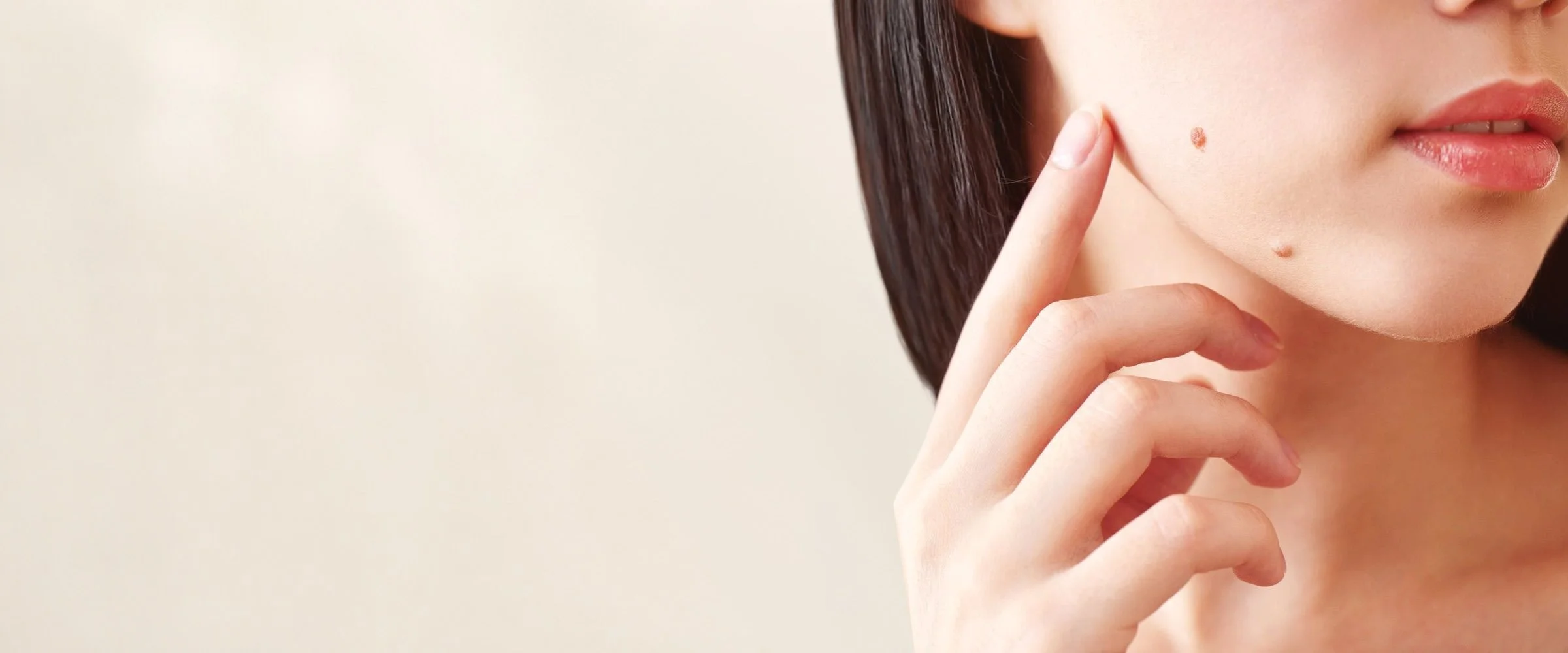
Moles are collections of pigment cells that develop within the skin. They may be flat or raised, light brown, dark brown, black, or skin-coloured.
Most people develop moles during childhood and early adulthood, and it is normal to have multiple moles across the face and body.
Why Do Moles Develop?
Genetics
Many moles develop due to inherited genetic factors and may run in families.
Sun Exposure
Ultraviolet (UV) exposure may contribute to the development of certain moles and influence their appearance over time.
Hormonal Changes
Hormonal fluctuations during puberty or pregnancy can occasionally cause moles to become darker or more noticeable.
Natural Ageing
New moles may appear throughout life, while existing moles may gradually change in appearance as part of the ageing process.
When Should A Mole Be Assessed?
Although most moles are benign, a mole should be evaluated if it:
Changes in size
Changes in colour
Develops an irregular border
Becomes itchy or painful
Bleeds unexpectedly
Appears significantly different from surrounding moles
Any suspicious or changing lesion should be assessed by a doctor before removal.
At A Glance
Treatment Approach
The most suitable removal method depends on the mole's size, depth, location and characteristics.

Assess
We examine the size, depth and characteristics of your mole to determine whether it is suitable for removal and identify the most appropriate treatment approach.

Personalise
A personalised treatment plan is developed, selecting either Radiowave Surgery or Excision based on the mole's location, depth and desired cosmetic outcome.

Remove
The mole is carefully removed using the chosen technique with precision, aiming for complete removal while preserving the surrounding healthy skin.

Heal
With appropriate aftercare and follow-up, the treatment area heals progressively, supporting the best possible cosmetic result and long-term skin health.
Recommended Treatments

Radiowave Surgery
Radiowave Surgery uses high-frequency radio waves to precisely remove selected superficial skin lesions while minimising thermal damage to surrounding tissue. It is commonly used for smaller raised moles and may offer a relatively quick recovery period.
Suitable For
Small raised moles
Cosmetic mole removal
Facial moles
Superficial lesions

Excision
Excision is a surgical technique that removes the mole together with a small margin of surrounding tissue. This method is often recommended for larger, deeper or more complex moles where complete removal is required. The area is closed with sutures following the procedure.
Suitable For
Deep moles
Larger moles
Suspicious lesions requiring assessment
Moles extending into the dermis
Frequently Asked Questions
Clinical Perspective
Every patient presents with unique concerns, anatomy, skin quality and treatment goals. At Rexults, every recommendation begins with a comprehensive medical assessment, allowing us to develop a personalised treatment plan that addresses the underlying cause of the concern rather than simply treating its visible signs. Depending on your individual needs, treatment may involve a single procedure or a carefully tailored combination approach to achieve safe, natural and long-lasting results.

-
Most benign moles can be removed safely. However, suspicious or changing lesions should be assessed by a doctor before treatment to determine the most appropriate approach.
-
Any procedure that removes a mole may leave some degree of scarring. The visibility of the scar depends on factors such as the mole's size, depth, location and individual healing characteristics
-
The recommendation depends on the mole's characteristics. Superficial raised moles may be suitable for radiowave removal, while deeper or larger moles may be better suited for excision. Our Doctors would provide you a recommendation after your consultation.
-
Local anaesthetic is used before treatment to improve comfort. Most patients experience minimal discomfort during the procedure
-
Healing varies depending on the treatment method and treatment area. Most superficial removals heal within several weeks, while excision sites may require suture removal and a slightly longer recovery period.
-
Recurrence is uncommon when the mole is completely removed, although certain lesions may occasionally recur depending on their depth and characteristics.