
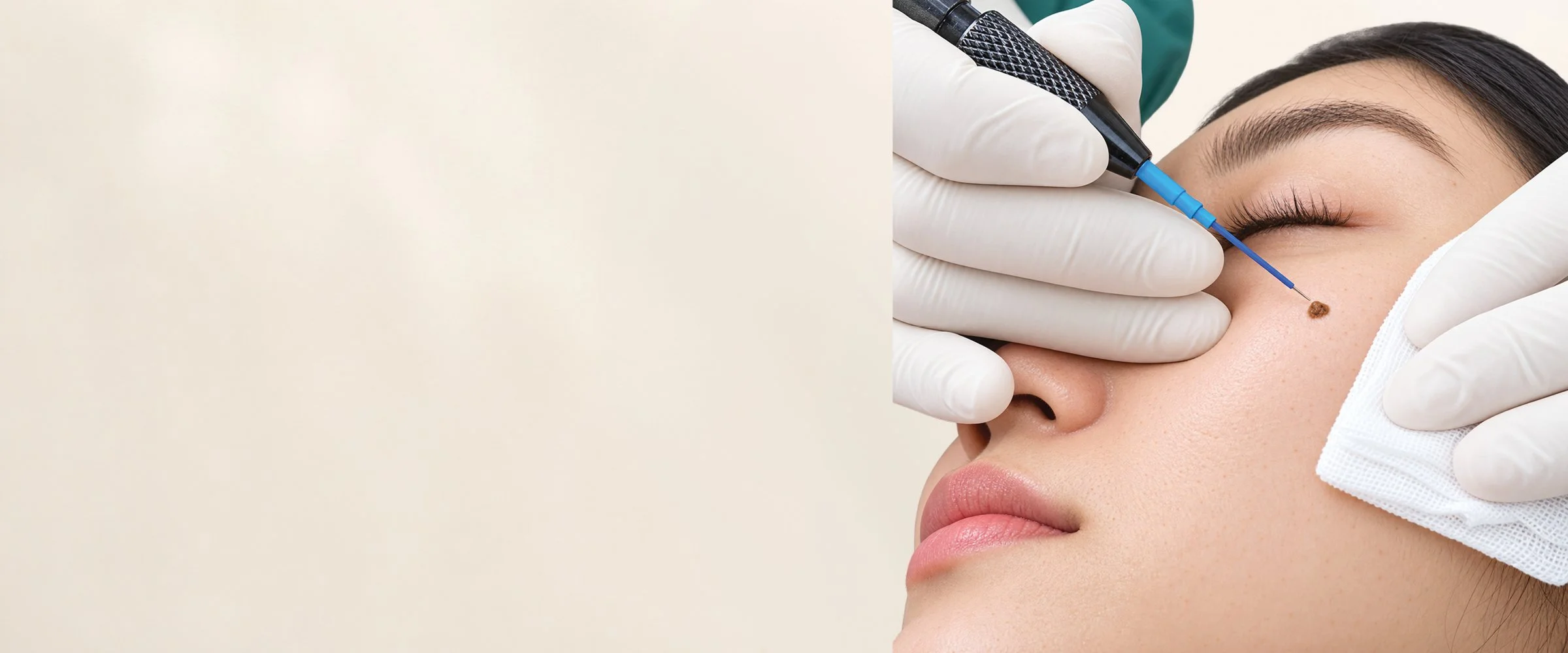
Radiowave Surgery
Precision Removal Of Selected Skin Lesions With Minimal Tissue Trauma
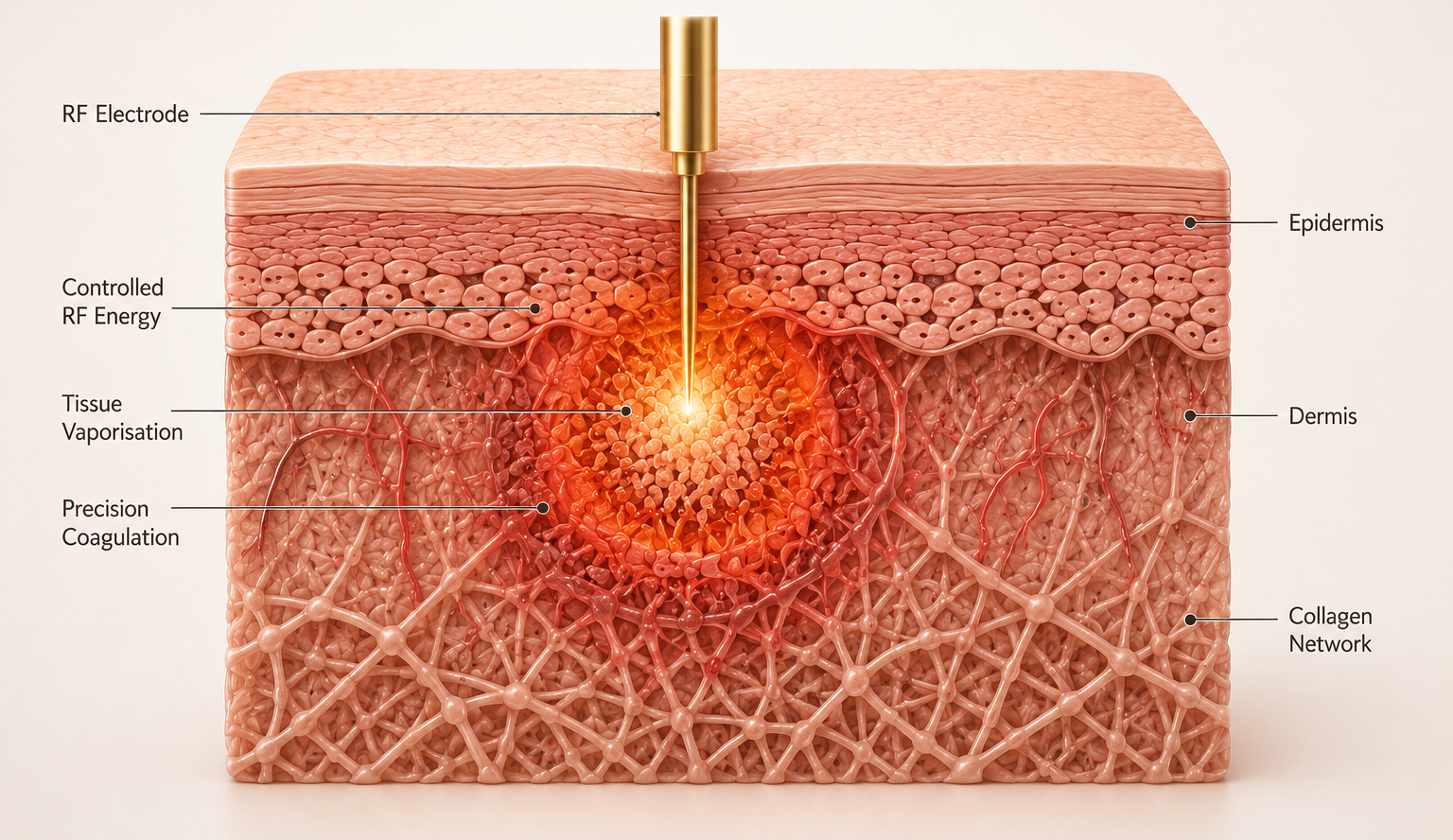
Radiowave Surgery uses high-frequency radio waves to precisely remove or treat selected superficial skin lesions. It may be recommended for cystic acne, seborrhoeic keratoses, warts, fibromas, milia and certain benign moles, providing a precise and controlled treatment approach.
What Is Radiowave Surgery?
Radiowave surgery uses high-frequency radio waves to remove or treat superficial skin lesions. It can be used for cystic acne, seborrhoeic keratoses, warts, fibromas, and some benign moles. In cystic acne, the procedure drains the cyst contents and ablates the cyst wall within the upper dermis.
TREATMENT TYPE
Minor Medical Procedure

DURATION
Approximately 60 Minutes
SUITABILITY
Selected Skin Lesions & Cystic Acne

DOWNTIME
Up To 7 Days
COMFORT LEVEL
Local Or Topical Anaesthesia

ADRESSES
Moles, Milia, Oil Bumps, Cystic Acne

What to Expect
A topical anaesthetic cream is applied before treatment. Large cysts may require local anaesthetic injections. Oral analgesics and antihistamines can be offered to reduce pain and swelling. Some discomfort during the procedure is normal; post-procedure pain is usually mild. The procedure is followed by low-level light therapy (Yellow LED) to support healing.
Risks and Considerations
Possible risks include pain, infection, scarring, pigmentation changes, and recurrence. Not all lesions are suitable for treatment. Your doctor will discuss individual risks and alternatives before the procedure.