
Melasma, Sunspots Or Deep Pigmentation: Why Correct Diagnosis Matters
Pigmentation concerns are among the most common reasons people seek aesthetic treatment, but not all dark spots are the same. Melasma, sunspots, and deep pigmentation may look similar at first glance, yet each has different underlying causes and often requires a different treatment approach. Choosing the wrong treatment can delay improvement or even worsen pigmentation. That's why obtaining an accurate diagnosis from an experienced medical practitioner is one of the most important steps towards achieving a clearer, more even complexion.
Understanding the Different Types of Pigmentation
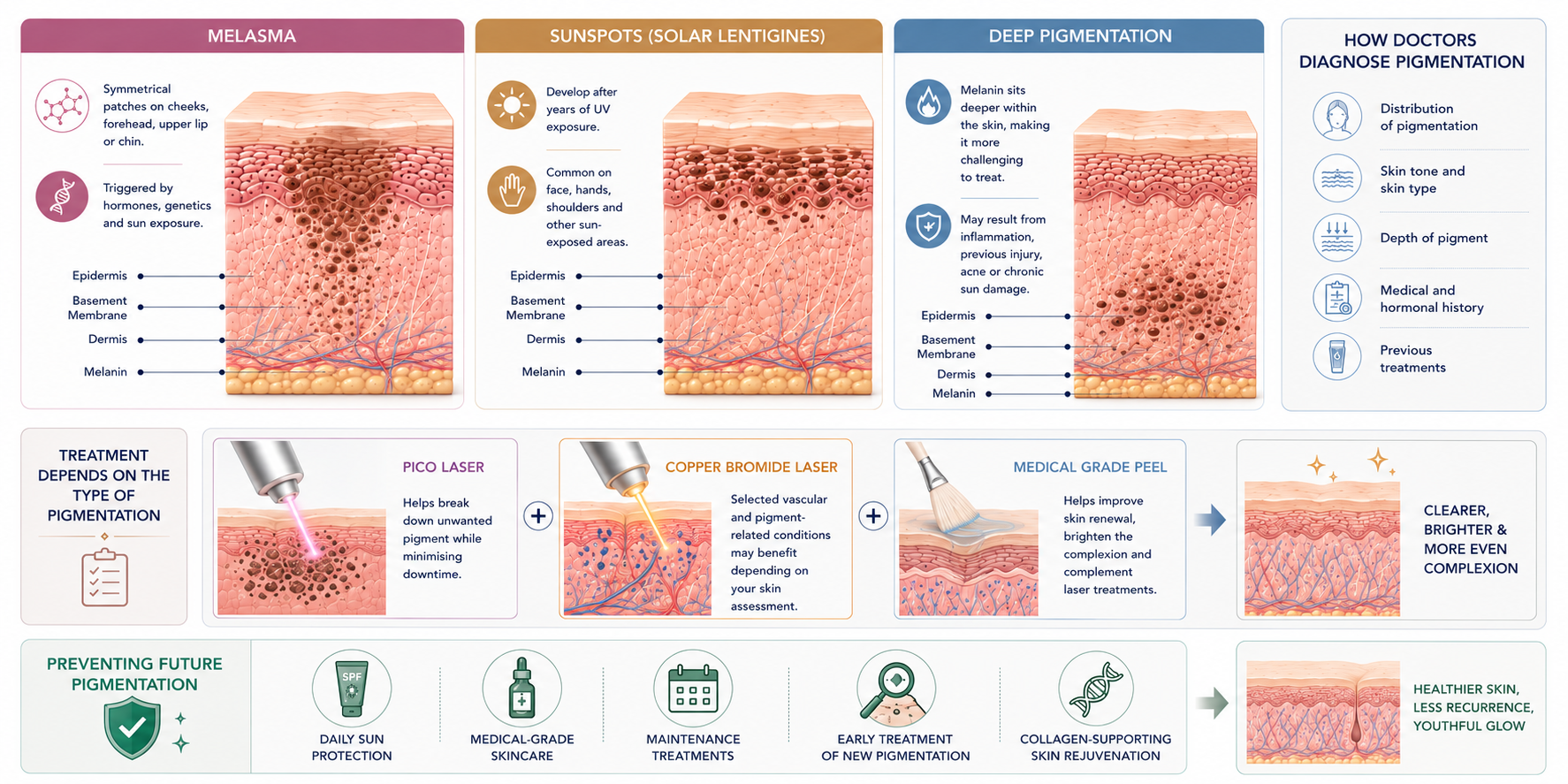
Pigmentation occurs when excess melanin is produced in certain areas of the skin. While the result may appear as brown or grey patches, the cause and depth of pigmentation can vary significantly.
The most common forms include:
Melasma
Often appears as symmetrical patches on the cheeks, forehead, upper lip, or chin.
Frequently triggered by hormones, genetics, and sun exposure.
Sunspots (Solar Lentigines)
Usually develop after years of ultraviolet (UV) exposure.
Commonly appear on the face, hands, shoulders, and other sun-exposed areas.
Deep Pigmentation
Melanin sits deeper within the skin, making it more challenging to treat.
May result from inflammation, previous skin injury, acne, or chronic sun damage.
If you're unsure which type of pigmentation you have, learn more about common pigmentation concerns here: Pigmentation.
Why Self-Diagnosis Can Be Misleading
Many people assume every brown spot is simply "sun damage." In reality, different pigment disorders respond differently to treatment.
For example:
Melasma may worsen with excessive heat or aggressive treatments.
Sunspots often respond well to targeted laser treatments.
Deep pigmentation may require multiple treatment modalities over several sessions.
Using the wrong skincare products or selecting an unsuitable laser treatment may produce disappointing results or increase the risk of post-inflammatory pigmentation.
How Doctors Diagnose Pigmentation
An experienced aesthetic doctor considers far more than the colour of a spot.
During your consultation, they may assess:
Distribution of pigmentation
Skin tone and skin type
Depth of pigment
Medical and hormonal history
Previous treatments
This comprehensive assessment allows the doctor to recommend the most appropriate treatment plan instead of relying on a one-size-fits-all solution.
Treatment Depends on the Type of Pigmentation
Modern pigmentation management often combines several approaches depending on the diagnosis.
Pico Laser
For many forms of pigmentation, Pico Laser can help break down unwanted pigment while minimising downtime.
Copper Bromide Laser
Selected vascular and pigment-related conditions may benefit from Copper Bromide Laser, depending on your skin assessment.
Medical Grade Peel
For suitable patients, Medical Grade Peel may help improve skin renewal, brighten the complexion, and complement laser treatments.
Your doctor will recommend the most appropriate combination based on your specific pigmentation condition.
Preventing Future Pigmentation Is Just as Important
Successful pigmentation treatment doesn't end once dark spots fade.
Long-term skin health often requires:
Daily sun protection
Medical-grade skincare
Maintenance treatments where appropriate
Early treatment of new pigmentation
Collagen-supporting skin rejuvenation
Maintaining healthy skin also helps reduce the visible signs of ageing, supporting a brighter and more youthful complexion over time.
Why Choose Rexults Aesthetics & Wellbeing Clinic?
At Rexults Aesthetics & Wellbeing Clinic, every pigmentation concern begins with a personalised assessment rather than a standard treatment package. By accurately identifying whether your condition is melasma, sunspots, post-inflammatory pigmentation, or deeper dermal pigmentation, the team can recommend treatments tailored to your skin type, lifestyle, and long-term goals.
Your treatment plan is designed not only to improve existing pigmentation but also to support healthier skin, reduce recurrence where possible, and maintain a naturally radiant appearance.
For personalised advice, consult with Dr. Edmund P. Wong to determine the most suitable treatment plan for your pigmentation concerns.
Book Your Pigmentation Assessment
The sooner pigmentation is correctly diagnosed, the sooner you can begin a treatment plan tailored to your skin rather than relying on trial and error.
Book your consultation today through the Rexults Contact & Appointment Page and discover the right approach for clearer, more even-toned skin.
Start Your Journey Towards Brighter, Healthier Skin
Whether you're concerned about melasma, sunspots, or deeper pigmentation, professional assessment is the foundation of successful treatment.
Schedule your personalised consultation through the Rexults Contact & Appointment Page and let the experienced team at Rexults help you achieve a clearer, brighter, and more youthful complexion.

