Breast augmentation is not one single operation. When people research ways to increase breast volume, they may come across implants and fat transfer as two different surgical approaches. Both can be used by appropriately trained surgeons to change breast fullness, but their materials, limits, healing and long-term responsibilities differ.
Implant-based breast augmentation places a medical device to add volume, while breast fat grafting transfers a patient's own harvested fat into the breast. Fat transfer may appeal to someone considering a relatively modest change, but it is not automatically safer or more suitable than an implant. The available donor fat and amount that survives after transfer also affect what is achievable.
In Singapore, patients comparing breast implants and fat grafting should begin with an assessment of anatomy, health, desired change and the evidence behind each operation. Not every clinic that lists fat grafting as a service necessarily offers fat transfer specifically for the breasts. The surgical indication and service availability must be confirmed before planning treatment.
Understanding Breast Volume and Shape
Breast appearance reflects glandular tissue, fat, skin elasticity, chest-wall anatomy and the relationship between the nipple and breast fold. These factors vary naturally, and breast proportions can change during pregnancy, breastfeeding, weight fluctuations and ageing.
A person may be concerned about limited volume, asymmetry or a perceived loss of fullness after weight change. Another may have adequate volume but notice that the breast sits lower. These are not identical concerns, and neither implants nor fat transfer reliably corrects substantial skin descent without a separate assessment.
An important distinction is breast size versus breast position. Adding volume can change projection and upper-breast fullness, but it does not automatically reposition a low nipple or remove excess skin. A surgeon should explain which features the proposed procedure can address and which will remain.
What does “natural” breast enhancement mean?
The phrase can be misleading. Some people use it to mean avoiding a manufactured implant; others mean a particular shape, feel or gradual-looking change. Fat grafting uses the patient's own tissue, but it still involves surgery, fat harvesting and injection. Implant-based operations can also aim for proportions appropriate to the person's anatomy. Neither method guarantees a specific appearance or sensation.
What Is Implant-Based Breast Augmentation?
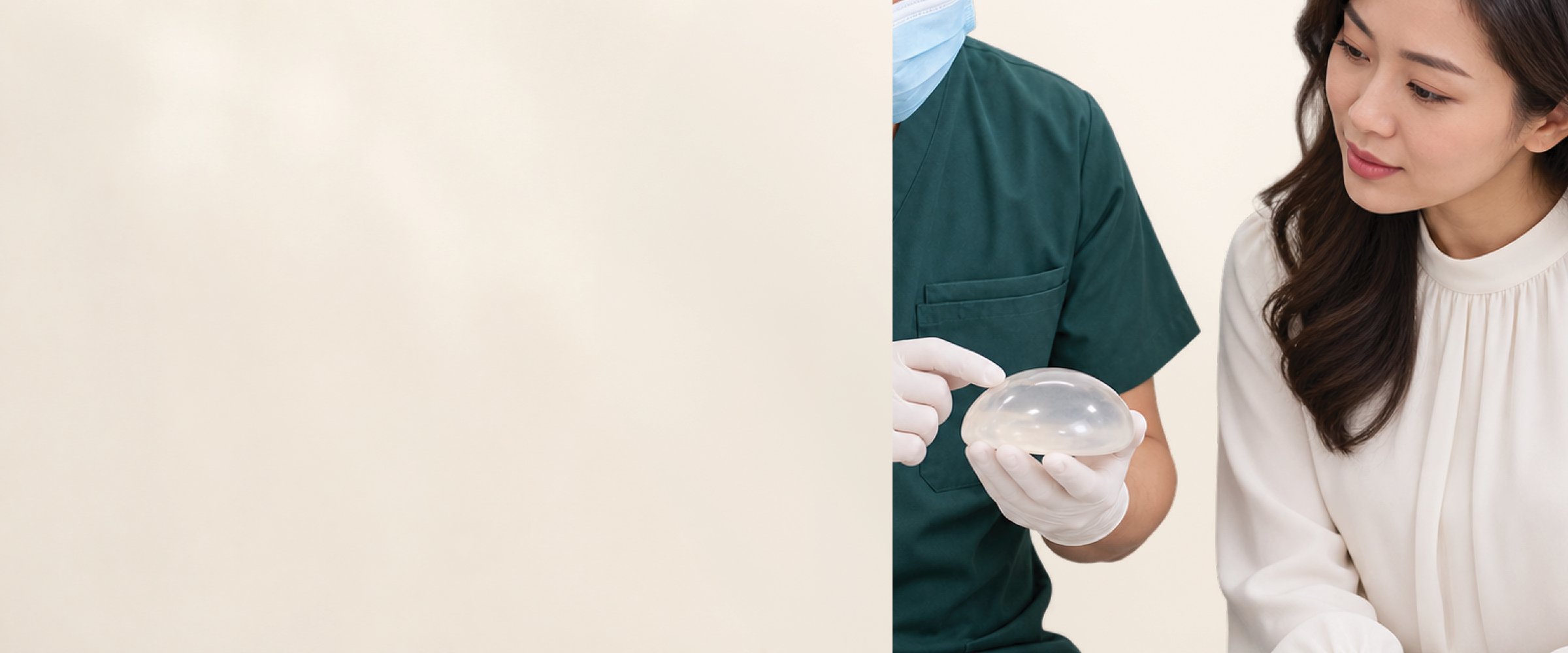
Implant augmentation places a medical breast implant through a planned incision. Implants generally contain silicone gel or saline within a silicone shell. They come in different dimensions and characteristics, and their selection must account for tissue coverage, chest dimensions and medical risks.
The surgeon plans an incision and a space for implant placement relative to the breast tissue and chest muscle. The available approaches vary, and not every implant or position is suitable for every patient. Anaesthesia, operation setting and postoperative monitoring are part of the surgical plan.
Rexults lists breast augmentation surgery among its services. Exact implant types, technique and eligibility should be discussed with the treating surgeon rather than inferred from a general treatment name.
Why implant size is not just a cup size
An implant has a specific volume and shape, but bra cup sizing varies among brands and with band measurements. The effect of any given implant also depends on the patient's existing tissue, skin elasticity and chest width. An implant chosen without regard to these features can create discomfort or other complications. A surgeon should discuss a reasonable range rather than promise a precise letter size.
What are the long-term responsibilities of implants?
Breast implants are not lifetime devices. Some patients need removal, replacement or other surgery because of rupture, capsular contracture, discomfort, changes in preferences or other complications. Silicone implant rupture can sometimes occur without obvious symptoms; applicable imaging guidance and personal risk factors should be discussed with the surgical team.
What Is Breast Fat Grafting?
Breast fat grafting, also called autologous fat transfer to the breast, uses fat obtained from elsewhere on the patient's body. Fat may be harvested from an appropriate donor region using a liposuction-type technique, prepared and transferred into selected breast tissues in small amounts.
Because the transferred fat must establish a blood supply to survive, not all initial volume remains. Some is reabsorbed during healing, and the final retained volume varies. The method is generally more suited to a relatively modest volume change than to very large increases, although exact possibilities depend on tissue conditions and surgical practice.
Rexults lists fat grafting as a service. Whether breast fat transfer is among its offered anatomical applications should be confirmed in consultation. This distinction matters because fat grafting may be used for different body regions and clinical purposes.
Where does the fat come from?
Possible donor areas may include the abdomen, flanks or thighs, provided the patient has adequate suitable fat and is medically fit for harvesting. The donor site becomes an additional part of the operation with its own potential swelling, bruising, contour changes, pain and healing requirements.
Readers looking into how fat is removed may find Rexults' information about liposuction relevant. However, harvesting fat for grafting and performing liposuction primarily for body contouring are not identical surgical goals.
What happens to the transferred fat?
The early appearance of the breasts can reflect swelling and volume that will not necessarily persist. Surviving fat may remain long term, but it can still change with weight and ageing. Surgeons cannot promise that all transferred fat will survive or that the final increase will match an exact measurement.
Fat necrosis can occur when some transferred fat does not survive. It may produce lumps, oil cysts or calcifications that require assessment. For this reason, patients should inform future breast-imaging professionals about their surgical history.
Breast Implants vs Fat Grafting: The Main Differences
The two approaches both aim to add selected breast volume, but they differ substantially in materials, how volume is achieved, follow-up and potential complications.
Which Approach Can Produce a Larger Volume Increase?
Implants generally allow a more defined increase because the surgeon selects a device with a known volume. This does not mean every implant size is medically appropriate. Skin, soft tissue and chest dimensions constrain what can be placed safely.
Fat transfer is usually considered for more modest enhancement. The amount that can be transferred at one time depends on the donor fat available and the capacity of recipient tissue to support the graft. The final retained volume is less predictable because some fat is absorbed.
A patient should be cautious about anyone promising a specific large increase using fat alone without a detailed assessment. More fat injected does not automatically mean more fat survives, and overly ambitious treatment may increase complications.
What About Breast Shape, Symmetry and Sagging?
Neither procedure guarantees perfect symmetry. Most people have some difference between the breasts before surgery. Changes in volume can sometimes make those differences more visible or require separate planning on each side.
Implants may increase projection and fullness, while fat transfer may be used to add selected volume. The distribution of the added material differs, but the final shape depends on existing anatomy and how tissues heal. Neither technique directly removes substantial excess skin.
When the main concern is heavy or overly large breasts rather than lack of volume, the relevant conversation may instead involve breast reduction. It is important not to treat all breast-shape concerns as reasons to add volume.
Recovery: Incisions Versus Donor and Recipient Sites
After implant augmentation, swelling, discomfort and tightness may occur around the breasts. Patients typically receive instructions on wound care, supportive garments, sleeping positions, lifting restrictions and follow-up. The return to work and exercise varies with technique and individual healing.
After fat grafting, there are at least two areas to consider: the donor region where fat was harvested and the breasts where fat was placed. Bruising, tenderness and swelling can occur in both. Compression garments may be used at the donor area if advised by the surgeon, while pressure on the recipient area may need special consideration.
Which has less downtime?
It is not accurate to assume fat transfer is always an easier recovery because it avoids implants. It includes liposuction harvest and recipient-site injections; larger donor areas can create meaningful discomfort. Implant surgery involves incisions and a device pocket. Recovery should be discussed in relation to the specific planned operation rather than a fixed promotional timeline.
Long-Term Monitoring and Breast Screening
A decision about implant-based augmentation also involves device-specific follow-up considerations. The US FDA advises that people with silicone gel implants discuss ultrasound or MRI screening for silent rupture, generally beginning five to six years after placement and every two to three years thereafter. Local guidance, product instructions and individual health needs may differ, so the patient's clinician should advise on the appropriate plan.
As explained in the wider context of fat grafting procedures, fat transfer does not involve maintaining an implant, but it can create findings on breast imaging, including oil cysts, fat necrosis and calcifications. These may be distinguishable from concerning lesions through appropriate radiological evaluation, but some findings can require further assessment.
Neither procedure replaces routine breast health care or age-appropriate screening. New lumps, persistent pain, unexpected swelling or changes in the breast should not automatically be attributed to previous surgery without assessment.
What Risks Should Be Discussed?
Both operations involve general surgical considerations such as bleeding, infection, anaesthetic complications, scarring, asymmetry and the possibility of further treatment.
Implant-specific risks include capsular contracture, rupture, displacement, infection and the need for later surgery. Rare implant-associated cancers, including breast implant-associated anaplastic large cell lymphoma and breast implant-associated squamous cell carcinoma, should be discussed using current evidence and the proposed implant's characteristics.
Fat-transfer risks include donor-site injury or irregularity, infection, fat necrosis, oil cysts, uneven retention and under- or over-correction. Although the material is the patient's own tissue, the transfer process still requires careful surgical technique and does not eliminate complication risk.
Implant and fat-grafting decisions should also account for smoking, medications, relevant medical conditions, prior breast procedures and whether the patient can follow the postoperative plan.
Why Dermal Fillers Are Not a Substitute for Breast Augmentation
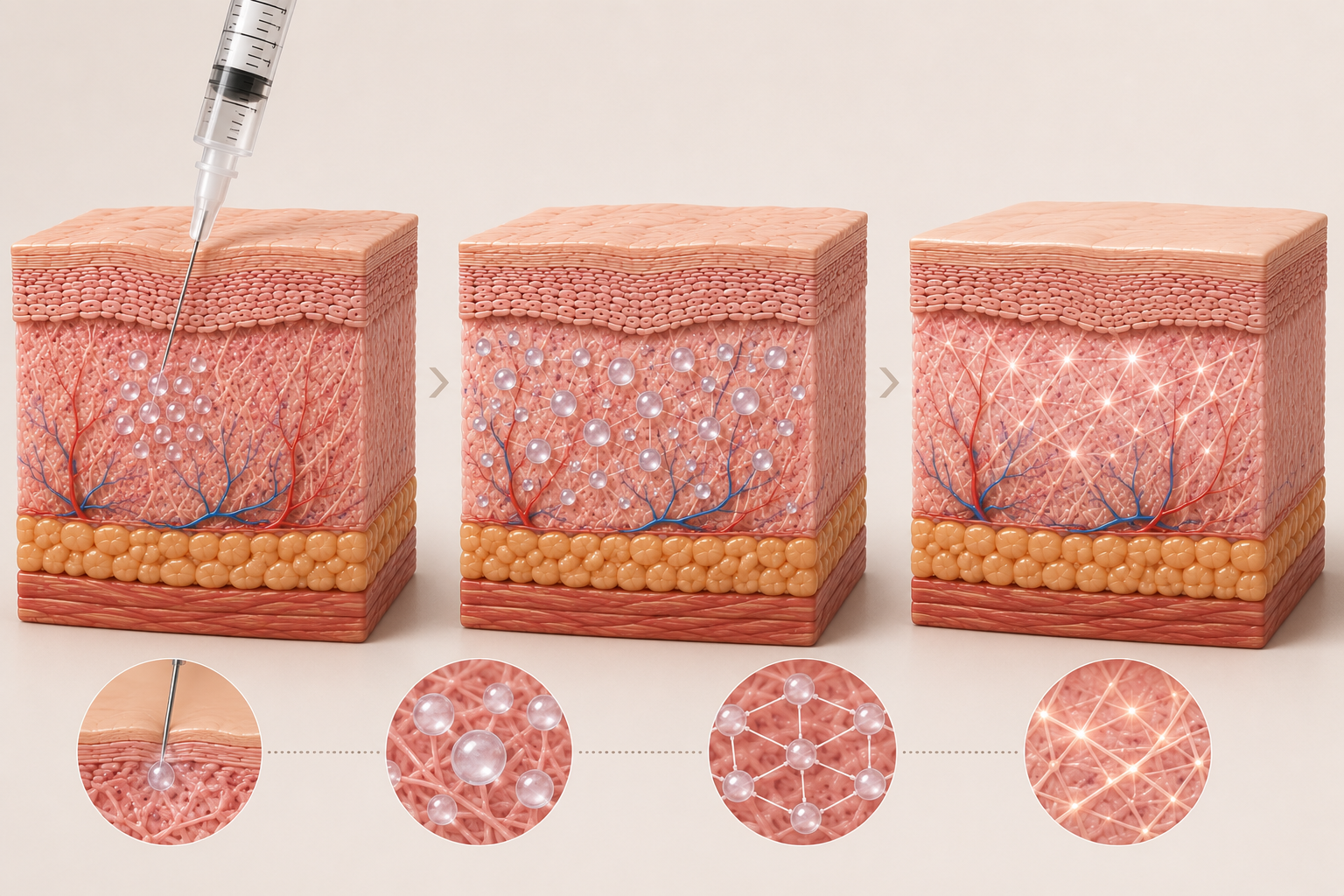
A separate source of confusion is the use of general-purpose dermal fillers for large-volume breast enhancement. Medical guidance from the US FDA warns against injectable dermal fillers for breast-size augmentation because of potentially serious harm. This is not the same as an operation using breast implants, and it is not the same as autologous fat grafting performed by an appropriately trained surgeon.
A proposed breast treatment should identify exactly what substance is being introduced, how it is used, whether the application is appropriate and what evidence supports its safety.
Preparing for a Consultation in Singapore
Discuss your medical history, breast symptoms, previous procedures, family history of breast disease, medications, pregnancy plans and smoking or nicotine exposure. The clinician should explain whether an examination or additional imaging is needed before elective breast surgery.
Ask whether the expected change can be achieved with your anatomy, where scars may occur, what the recovery involves, how future pregnancy or weight changes might affect the result, and whether another operation may be needed. For implants, ask about product selection and long-term monitoring. For fat transfer, ask about donor-site changes, likely fat retention and how imaging findings will be managed.
The best choice may be an implant, a fat-transfer discussion, another surgical plan or no operation. A treatment should not be selected simply because it is advertised as more natural, longer-lasting or less invasive.
Arrange an individual discussion about breast surgery and fat grafting with Rexults Clinic.
Understanding Breast Volume Enhancement Options
Breast implant augmentation and breast fat grafting approach volume enhancement through different materials and procedures. An implant is a medical device with defined characteristics and long-term monitoring needs. Fat transfer uses living tissue from the patient, involves a donor-site procedure and has variable retention.
Neither approach is inherently best for everyone. The appropriate conversation begins with anatomy, the scale of change considered, relevant health risks and what the patient is willing to accept in terms of recovery and follow-up. No procedure is always a reasonable option.