Facial redness is a common complaint, but the cause can differ greatly from one person to another. Some people flush when moving from air-conditioning into Singapore's outdoor heat. Others have redness that persists even when they feel cool, visible fine blood vessels on the cheeks, or stinging after applying ordinary skincare products.
When people research Dual Yellow Laser and LED light therapy for facial redness, they may assume that both are versions of the same treatment. They are not.
In brief, vascular-targeting laser treatment uses a concentrated beam of light to produce selected effects in blood-vessel-related targets. LED therapy uses lower-intensity light and is generally discussed as a supportive or adjunctive approach. Their intensity, biological effects, evidence and indications differ substantially. Neither should be considered a universal treatment for a persistently red face.
Before selecting a device, a clinician should determine whether redness is caused by rosacea, visible superficial vessels, skin-barrier irritation, eczema, contact dermatitis or another medical condition. That diagnosis is more valuable than a simple claim that a treatment “calms redness”.
Why Does Facial Redness Happen?
Redness can result from increased blood flow, dilated superficial blood vessels, inflammation or irritation. The visible appearance may be similar, but the underlying processes are not.
Transient flushing occurs when facial blood vessels dilate temporarily. Heat, exercise, alcohol, spicy food or emotional changes may trigger it in some people. Persistent erythema is redness that remains for longer periods. Telangiectasia refers to visible small superficial blood vessels, sometimes called broken capillaries.
Other individuals describe a burning or stinging sensation even when little redness is visible. This can indicate barrier disruption or skin sensitivity rather than a primarily vascular problem.
Rexults describes redness and flushed skin as a skin concern. A doctor can help distinguish temporary flushing from persistent vascular changes and inflammatory disease.
Rosacea Is Not the Same as “Sensitive Skin”
Rosacea is a chronic inflammatory disorder that may involve flushing, persistent central facial redness, visible vessels, acne-like bumps, eye symptoms or skin thickening in some individuals. Not every red cheek indicates rosacea. Allergic contact dermatitis, seborrhoeic dermatitis and eczema can also produce redness.
By contrast, sensitive skin is a description of symptoms, not a specific diagnosis. Someone with a damaged skin barrier may feel stinging after cleansing, while someone with rosacea may have ongoing inflammatory or vascular changes even with gentle skincare.
These distinctions shape treatment. A laser may be relevant for selected visible vessels, whereas an active eczema flare may require completely different medical management. Additional light exposure is not automatically helpful just because the face looks red.
What Is Dual Yellow Laser?
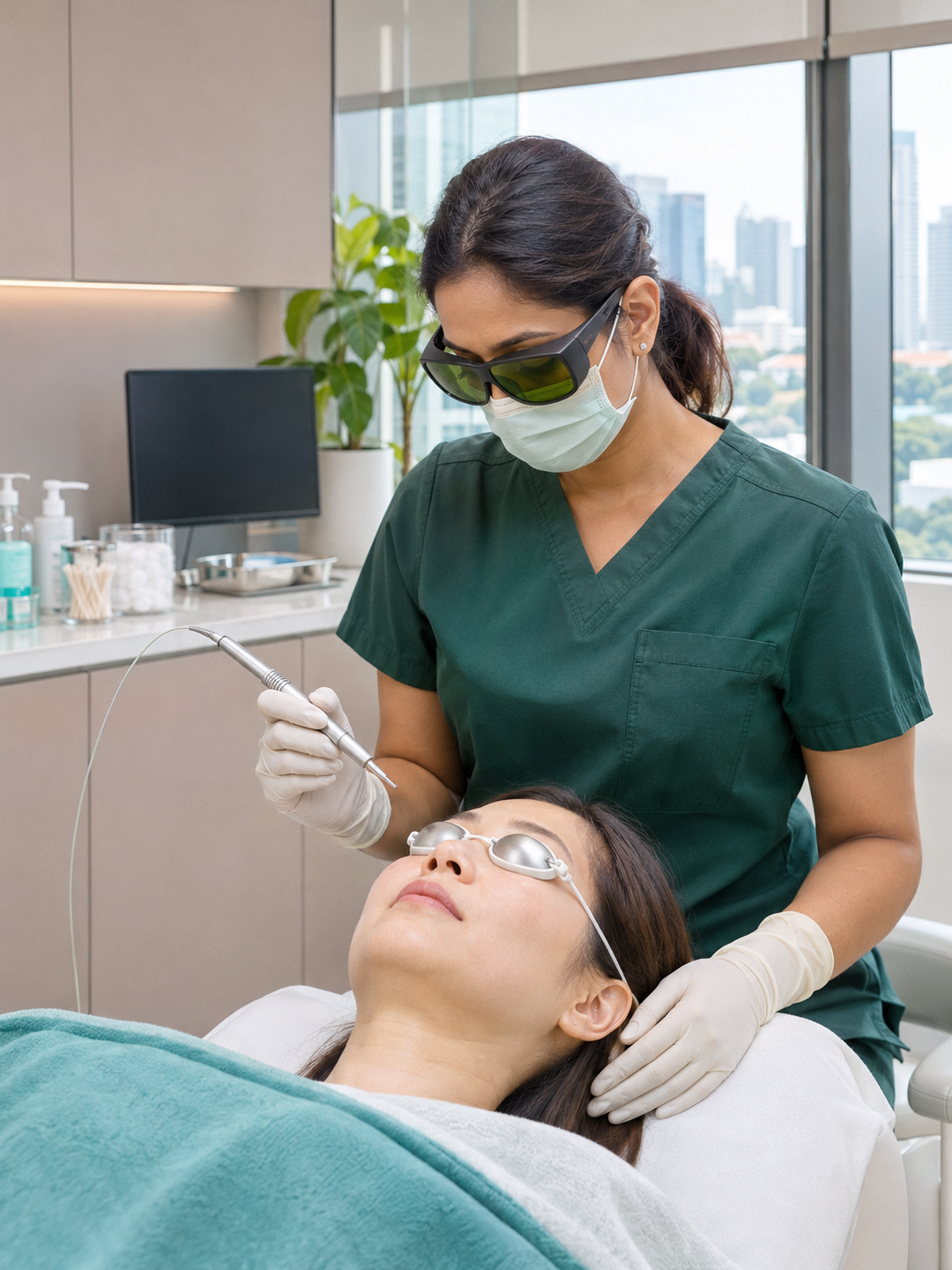
Dual Yellow Laser refers to a laser platform associated with specific visible-light wavelengths, including yellow light used for selected vascular-related targets. The interaction between a vascular laser and haemoglobin can create a controlled effect in superficial blood vessels under appropriate settings.
However, the device name alone does not indicate the exact mode, energy level or diagnosis. A doctor must determine whether the desired target is a visible vessel, diffuse persistent redness or something else. Device availability and settings should be confirmed with the clinic.
Explore Rexults' Dual Yellow Laser treatment information for the clinic's description of its service.
How Can a Laser Affect Visible Blood Vessels?
Vascular lasers work by delivering energy that is preferentially absorbed by components of the target blood vessel. In suitable circumstances, this may reduce the visibility of certain vessels. Results depend on vessel diameter, depth, location, treatment parameters and individual skin characteristics.
Treating a visible capillary is not the same as permanently switching off every trigger of flushing. Rosacea can be chronic, and new vessels may become visible over time. A patient may still need medication, barrier care or lifestyle adjustments after a procedure.
Can a Laser Treat Every Kind of Redness?
No. Inflammatory papules, eczema, irritation, flushing triggered by systemic factors and persistent vascular redness are distinct clinical situations. Laser treatment may help some manifestations of rosacea, especially visible vessels, but it is not a substitute for diagnosing and managing the underlying disorder.
People often see “redness treatment” online without details about the skin condition being treated. Ask which specific sign the procedure is intended to improve, and which symptoms are unlikely to respond.
What Is Illuminate LED Therapy?
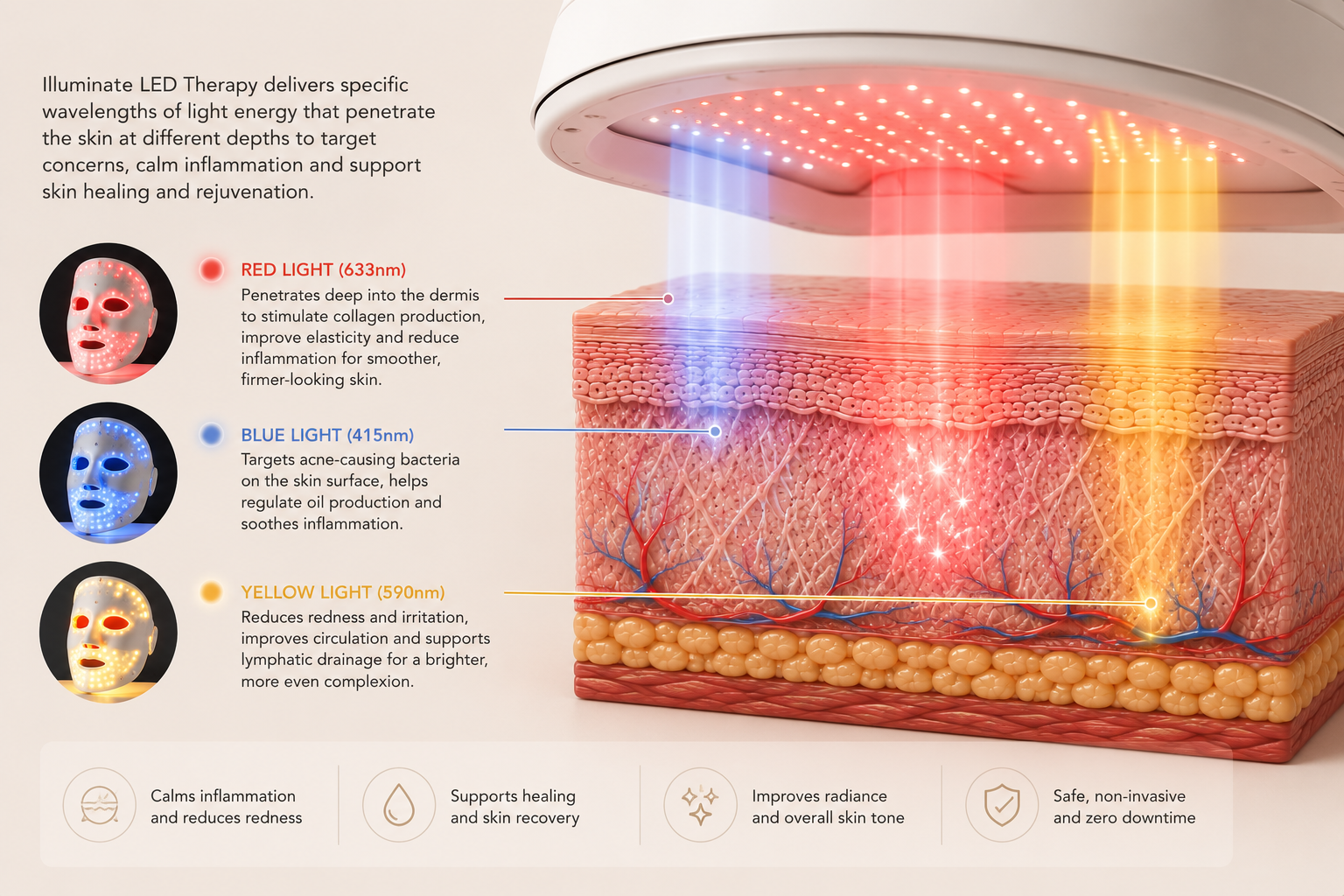
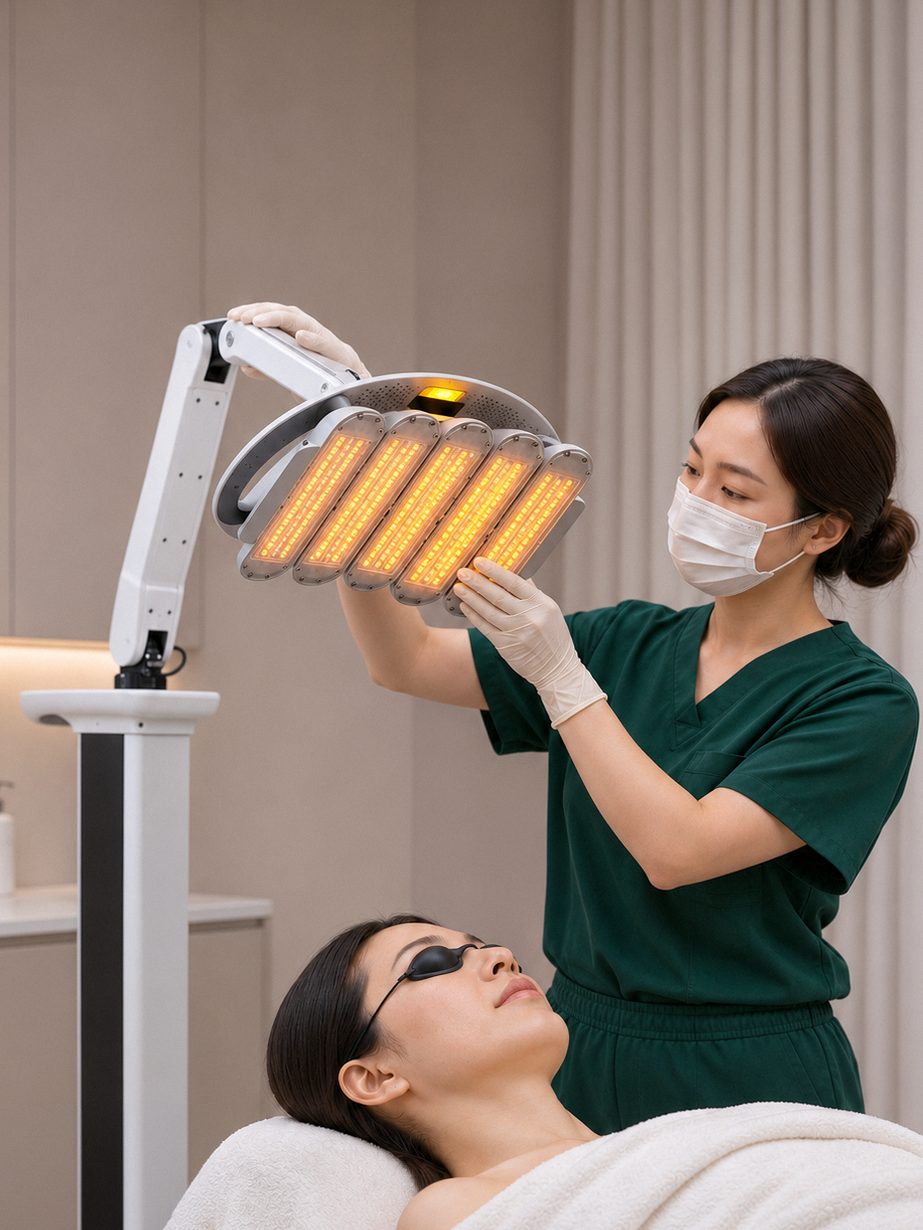
LED stands for light-emitting diode. LED devices emit light at selected wavelengths and intensities. In dermatology, some protocols are described as photobiomodulation: the light is investigated for effects on cellular signalling, inflammation or recovery processes.
LED treatment differs from a laser in beam characteristics and, typically, delivered intensity. It does not perform the same targeted vascular effect as a vascular laser. Wavelength, irradiance, treatment duration and device design matter when assessing claims about benefits.
Rexults lists Illuminate LED Therapy as a service. The precise wavelengths and protocol used in this programme should be confirmed before making product-specific claims.
Can LED Therapy Help Rosacea or Sensitive Skin?
Some small studies and reviews suggest that photobiomodulation may affect inflammatory pathways or symptoms in selected skin conditions. However, the evidence for LED specifically as a treatment for rosacea remains limited, and results from one device cannot automatically be applied to another.
An LED session should not be described as a proven cure for rosacea, a method that permanently removes blood vessels or a replacement for medical assessment. It may be discussed as supportive care within an individualised plan if a clinician identifies a reason for using it and explains the limitations.
Dual Yellow Laser vs Illuminate LED Therapy: Key Differences
These technologies should be compared by their proposed clinical targets, mechanism and evidence—not by the colour of the light alone.
Which Option Is More Relevant for Visible Broken Capillaries?
Visible superficial vessels are often a more direct potential target for appropriately selected vascular laser treatment than for conventional LED therapy. Energy-based treatments can reduce the appearance of certain vessels, although they do not guarantee complete or permanent clearance.
A doctor should assess vessel characteristics, skin tone, prior treatments and medications before choosing settings. Some vessels may be too deep or large for a particular approach, while other features of redness may remain even after visible vessels improve.
A 2026 evidence review of energy-based treatments for rosacea found encouraging results for some laser and light-based modalities but also highlighted inconsistent study quality. That supports cautious, condition-specific expectations rather than blanket comparisons of one device against all others.
What If the Main Problem Is Stinging, Burning or Irritation?
When the primary problem is a burning sensation after cleansing or cosmetics, the clinician should consider barrier dysfunction and inflammatory conditions before recommending a device. In those cases, removing an irritant, simplifying skincare or treating an underlying condition may be more appropriate than adding another procedure.
Rexults' article on environmentally stressed skin provides a related perspective on environmental influences. Someone who also experiences tightness and flaking may benefit from understanding dry and dehydrated skin, since dehydration can coexist with redness but is not the same diagnosis.
Can a Harsh Skincare Routine Make Redness Worse?
Yes. Frequent exfoliation, over-cleansing and combining multiple irritating active ingredients may damage the skin barrier and increase stinging or visible irritation. Fragrance and certain preservatives can provoke reactions in susceptible individuals. More products are not always better.
A clinician may recommend a temporary, simple routine with gentle cleansing, suitable moisturisation and sun protection while assessing the underlying condition. Introducing a new laser or LED protocol before a severe reaction settles may be inappropriate.
Are Dual Yellow Laser and LED Therapy Commonly Combined?
Some clinics may use an LED session around other treatments as part of a broader skin-care protocol. That does not demonstrate that combining it with a vascular laser always improves outcomes. Clinical value depends on the actual device, protocol, patient and treatment objective.
If a combination is proposed, patients should ask which outcome each step is expected to address, whether there is direct evidence for the combination, whether additional cost is justified and what alternatives exist.
Rexults lists a Redness Recovery Programme. Its current components and indications should be confirmed with the clinic; a listing alone does not prove that every patient with redness should receive both treatments.
What Are the Risks and Recovery Considerations?
After vascular laser treatment, temporary redness, swelling, tenderness or bruising may occur. Depending on treatment settings and skin characteristics, blistering, pigment change or scarring can occur less commonly. Patients with darker skin tones or a history of post-inflammatory hyperpigmentation require careful assessment.
LED therapy is often described as relatively low-intensity, but appropriate eye protection, protocol selection and assessment of photosensitivity still matter. A patient taking photosensitising medicines, or with a light-sensitive condition, should disclose that information before treatment. The absence of needles does not make a procedure automatically appropriate.
Recovery advice should be specific to the actual treatment. Sun protection and avoiding unnecessary irritation are commonly relevant, but patients should follow their clinician's instructions rather than generic online rules.
How Does Pigmentation Relate to Facial Redness?
Redness and pigmentation can coexist, and a mark may look reddish-brown under particular lighting. Yet a vascular target is not the same as melanin pigment. Treating the wrong target can produce disappointing results or unnecessary reactions.
Rexults' separate pigmentation page provides context for brown patches and uneven colour. Someone whose marks are mainly post-acne pigment may need a different discussion from someone with persistent vessel-related redness.
What Should You Ask at a Redness Consultation in Singapore?
A good consultation should identify whether the main symptom is flushing, fixed erythema, visible vessels, burning, papules or a mixture. Ask whether rosacea or another inflammatory condition is suspected and whether topical or prescription treatment should come first.
Then ask what the proposed device can realistically change, what evidence supports its use for your particular diagnosis, whether several sessions may be necessary, and what complications or recurrence are possible. Good treatment planning also leaves room for choosing no procedure when the problem is better managed medically.
To discuss persistent redness or reactive skin, contact Rexults Clinic through its official consultation channel for a medical assessment of your specific concern.
The Most Useful Difference Is the Treatment Goal




Dual Yellow Laser and Illuminate LED Therapy should not be described as interchangeable “redness lasers”. A vascular laser and a low-intensity LED system interact with tissue differently, and evidence for their respective uses is not equivalent.
For visible superficial vessels, a properly chosen vascular procedure may be relevant. For discomfort, sensitivity or inflammatory signs, barrier care and diagnosis may be more important. LED may be discussed as supportive care in selected circumstances, with clear acknowledgement of uncertainty.
If you are considering options for facial redness in Singapore, arrange a consultation with Rexults Clinic to review the diagnosis, available treatments and realistic expectations.