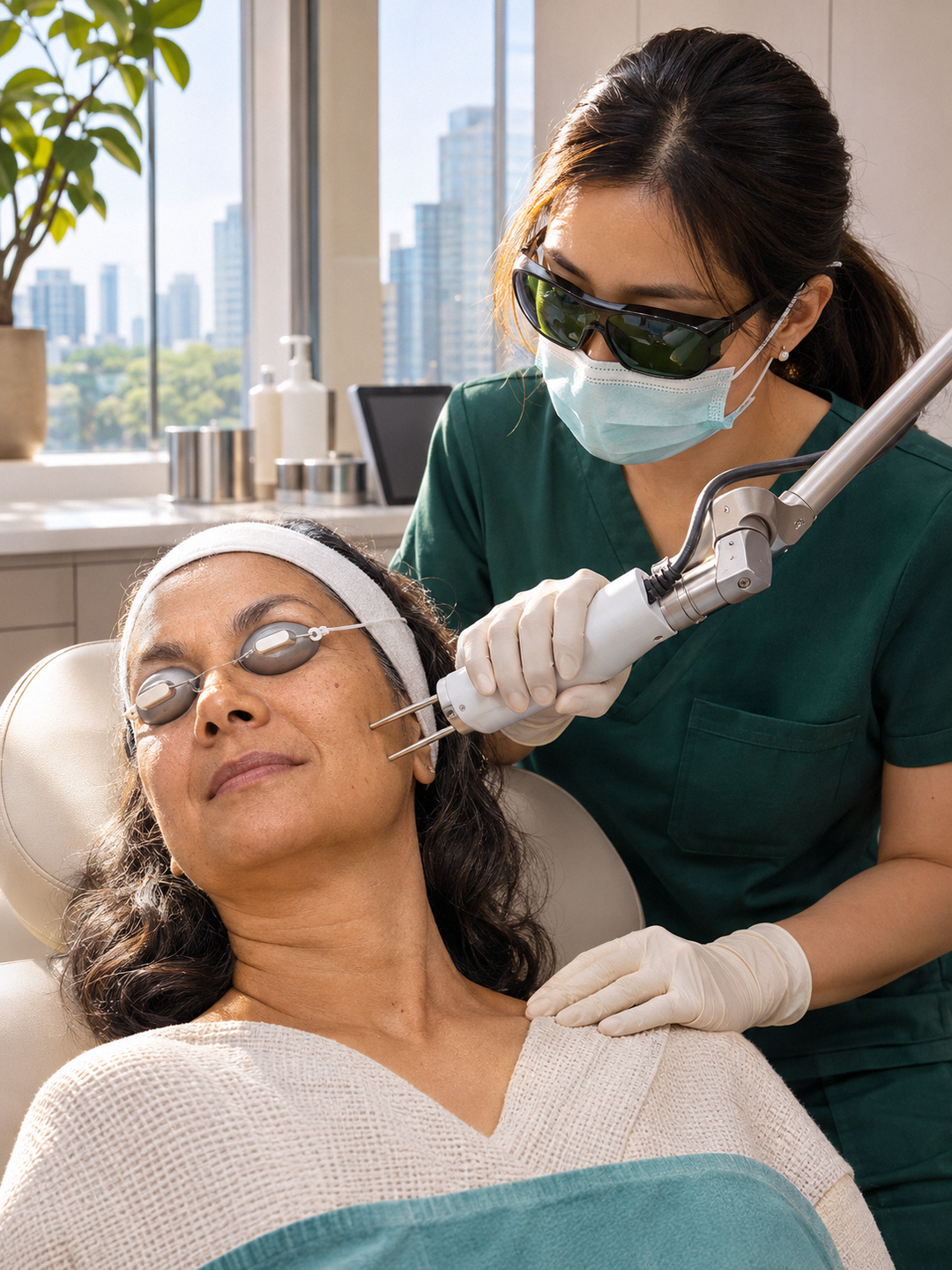
Not all brown patches on the face are the same. Freckles, solar lentigines (sunspots), post-inflammatory marks and melasma can look similar in photographs, yet they differ in cause, depth, tendency to recur and response to treatment. This matters when comparing Pico Laser and Dual Yellow Laser in Singapore, because each uses a different light-delivery approach and may be considered for different clinical situations.
The short answer: Picosecond lasers deliver extremely short pulses that can disrupt pigment through predominantly photoacoustic effects. Dual Yellow systems, including copper-bromide platforms, use yellow and green wavelengths to interact with selected vascular and pigmented targets. Neither technology is automatically the best treatment for every type of pigmentation, and neither is a guaranteed cure for melasma.
A person searching for 'pigmentation laser Singapore' should begin by identifying the condition rather than selecting a machine from a list. The choice of wavelength, settings, skin type and accompanying care can be more important than the marketing name of the device.
Why a Pigmentation Diagnosis Comes Before Choosing a Laser
Pigmentation is an umbrella term for changes in skin colour. Melanin is produced by melanocytes and distributed within skin cells, but visible darkening can arise through several different pathways. Ultraviolet exposure may stimulate pigment production; inflammation can leave post-inflammatory hyperpigmentation; hormones and light exposure can contribute to melasma.
Melasma Is Not the Same as a Sunspot
Melasma often presents as patches, commonly across the cheeks, forehead or upper lip. It can be influenced by hormones, ultraviolet radiation and visible light and has a strong tendency to recur. Solar lentigines are more localised areas associated with cumulative sun exposure. These conditions do not necessarily respond to the same devices or treatment plans.
Rexults outlines concerns and available evaluation pathways on its pigmentation page. That is a useful starting point for people who are unsure whether they have melasma, sunspots, freckles or something else entirely.
What About Marks Left After Acne?
Post-inflammatory hyperpigmentation (PIH) can occur after acne, insect bites or other inflammation. It is a colour change, not a depressed scar. If acne remains active, preventing new inflammation may matter more than repeatedly targeting each new mark. Aggressive treatment can sometimes create additional irritation and pigmentation, particularly in patients prone to PIH.
What Is Pico Laser?
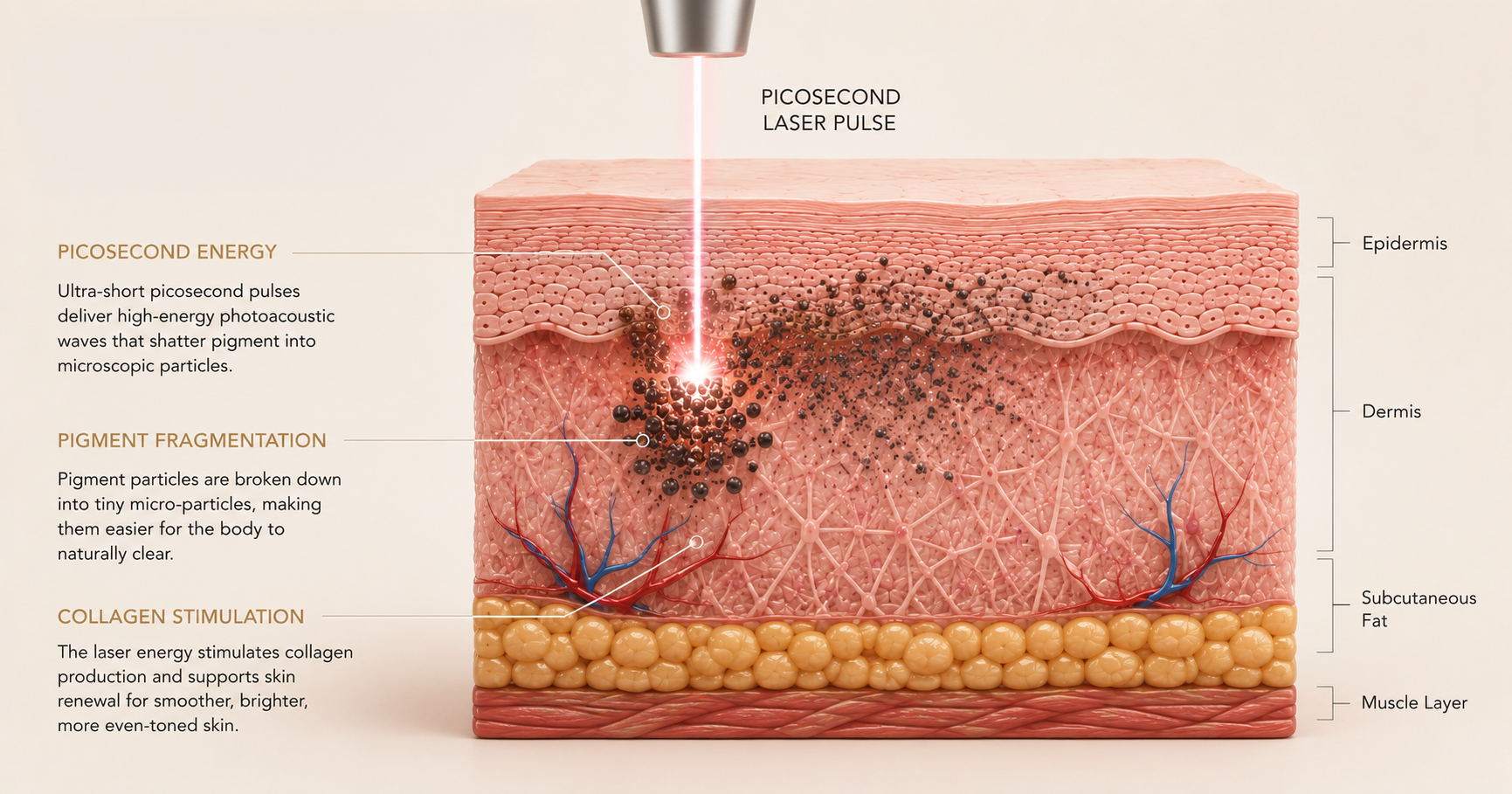
A picosecond laser uses pulses measured in trillionths of a second. Depending on the device and wavelength, the brief pulses interact with pigment or ink particles using predominantly photoacoustic effects. Different picosecond platforms have different wavelengths and delivery modes; the phrase 'Pico Laser' is not a guarantee that every machine has identical indications.
Pico technology has been studied for a range of pigmentary problems, and some systems have additional fractional attachments used for texture-related indications. The exact system, treatment settings and intended target all need to be established before describing a likely outcome.
Rexults lists Pico Laser among its laser services. The clinic should confirm the current device, approved indication and protocol before the article is used to discuss device-specific parameters or session counts.
When Might Pico Laser Be Considered for Pigmentation?
Depending on the diagnosis, clinicians may consider a picosecond platform for selected pigmented lesions or other recognised indications. Some forms of discrete sun-induced pigment may respond differently from diffuse melasma. Research has explored picosecond treatment for melasma, but improvement may be temporary and inflammation or rebound pigmentation can occur.
A laser cannot be assumed safe or effective simply because its pulses are brief. Redness, swelling, crusting, blistering, hyperpigmentation, hypopigmentation and scarring remain possible. Appropriate settings, eye protection and experienced clinical assessment matter.
What Is Dual Yellow Laser?
Dual Yellow Laser refers to systems that use yellow and green laser light. Rexults' earlier published technical descriptions identify copper-bromide wavelengths around 578 nm (yellow) and 511 nm (green). Yellow light can interact with haemoglobin-related vascular targets, while green light may be used for selected superficial pigment targets.
That gives the technology a different emphasis from a picosecond system: the clinician can consider whether vascular redness accompanies a pigment-related concern, rather than assuming every brown area is only a melanin problem.
Rexults provides a current destination for Dual Yellow Laser. The actual wavelength, treatment plan and clinical uses should be confirmed from the currently used equipment, rather than inferred solely from a historic product description.
Why Do Blood Vessels Matter in Some Pigmentation Conditions?
Melasma is complex. Researchers have investigated vascular changes and inflammatory pathways in addition to melanin production. Some light-based approaches have therefore been explored as adjuncts in selected cases. However, a possible vascular component does not establish that a yellow laser is routinely superior or that treating vessels alone resolves melasma.
A clinician may weigh the visible pattern, symptoms, prior treatments and medical history when deciding whether a vascular or pigment-targeting technology has any role.
Pico Laser vs Dual Yellow Laser: The Main Differences
The treatments differ in pulse delivery and target emphasis. That is a more meaningful distinction than calling one 'stronger' and the other 'gentler'. The table below compares broad principles, not guaranteed results for any specific patient.
Which Laser Is Better for Melasma?
There is no universally best laser for melasma. The American Academy of Dermatology describes treatment as commonly combining sun protection and appropriate topical medication, sometimes adding procedures. An international expert consensus on melasma has also emphasised that lasers should mainly be considered for patients who do not respond adequately to other treatments.
Melasma can persist or recur even after visible improvement. A short-term reduction in pigment does not mean the underlying tendency to produce pigment has disappeared. Heat, irritation, ultraviolet radiation and visible light can undermine results.
For this reason, a clinician should examine whether the diagnosis is actually melasma, whether topical measures have been optimised and whether a laser offers a reasonable benefit relative to the patient's risk of unwanted pigmentation.
Could a Laser Make Melasma Darker?
Yes. Laser-related inflammation may trigger PIH or exacerbate melasma. This risk is not unique to a particular brand. Darker skin types or people with a history of pigment changes after irritation may require especially cautious planning. Previous adverse reactions to laser or peels should be disclosed before treatment.
What About Sunspots, Freckles and Photodamage?
Freckles and solar lentigines are not identical to melasma. Discrete pigmented spots can sometimes be suitable for appropriately selected pigment-directed light treatments. However, a changing, irregular or suspicious lesion needs medical assessment before any cosmetic procedure, since some pigmented lesions require investigation rather than laser removal.
Rexults discusses the wider consequences of long-term ultraviolet exposure under photo-damaged skin. Photodamage may also involve fine lines and surface roughness, which are not necessarily corrected by the same settings used to address pigmentation.
Does Laser Treatment Remove Uneven Skin Tone in One Session?
No reliable universal session count exists. Some discrete spots may improve after limited treatment, while persistent or recurrent pigment disorders may need a longer plan or may not be appropriate laser targets. Even when visible pigment improves, future sun exposure can produce new pigmentation. Treatment schedules should be determined from diagnosis and response, not marketing claims.
Recovery and Risks: What Should Patients Expect?
With any laser, the experience and recovery depend on wavelength, settings, area treated and individual skin response. A patient may experience warmth or discomfort during treatment, followed by redness or swelling. More intensive settings may produce crusting or other visible changes. Some procedures require specific aftercare and temporary avoidance of irritating products.
Less common but important complications include burns, scarring, post-inflammatory darkening and loss of pigment. The fact that a technology is described as non-ablative does not mean there is no risk or downtime for every patient.
A consultation should cover medications, recent tanning, pregnancy or other relevant health circumstances, previous procedures, and how the proposed treatment will be delivered. Appropriate eye protection is necessary for laser procedures.
How Singapore's Sun Exposure Changes Pigmentation Care
Singapore has substantial year-round ultraviolet exposure. The foundational step for many pigmentary conditions is daily broad-spectrum sun protection, not simply repeating laser sessions. Depending on individual needs, a doctor may recommend SPF 30 or higher, protective clothing and reapplication during prolonged outdoor exposure.
For melasma, tinted sunscreen containing iron oxides may help protect against visible light, which can worsen pigmentation in some skin types. Gentle skincare also matters: products that repeatedly sting or burn may worsen pigment changes through irritation.
Patients exploring uneven skin tone and texture should understand that improving an existing mark and preventing new marks are separate objectives. Maintenance may be an ongoing part of care even after a procedure.
Can Pico and Dual Yellow Be Used Together?
Sometimes different technologies are discussed within a clinician-designed plan, but 'combination treatment' should never be interpreted as automatically better. Two sessions addressing distinct targets may be considered in selected circumstances, while an overly intensive approach could increase inflammation and undermine pigment control.
Rexults lists a Customised Laser Programme, but whether a given patient should receive one device, another or neither requires medical evaluation. The actual equipment, timing and risks should be verified during consultation.
What Questions Are Worth Asking a Doctor?
Useful questions include: What pigmentation condition do I have? Is it superficial or more complex? Why is this wavelength suitable? Are topical measures likely to help first? What is the risk of rebound pigmentation? How will improvement be measured, and what is the plan if the pigmentation returns?
The clinic's approach to skin-health assessment is also described in Dr E.P. Wong’s profile. Relevant experience should support careful patient assessment rather than imply that every individual will respond in the same way.
Choosing Between Pico Laser and Dual Yellow Laser in Singapore
A useful comparison starts with the diagnosis. Pico Laser and Dual Yellow Laser deliver light differently and may be considered for different targets. Neither is universally indicated for melasma, sunspots or post-acne marks. The selection should take account of skin type, evidence, the actual device, alternative treatments and the possibility of pigment worsening.
If you are unsure what type of pigmentation you have, arrange a consultation with Rexults Clinic to discuss assessment and appropriate options.
A good plan also extends beyond the treatment room. Sun protection, gentle skincare and management of triggers can determine whether improvements last and whether new pigment appears. The aim is informed, individualised care rather than a single 'best laser' for everyone.
To discuss your pigmentation concerns and whether laser treatment is appropriate, contact Rexults Clinic through its consultation WhatsApp channel.
FREQUENTLY ASKED QUESTIONS