Someone seeking clearer, smoother-looking skin may encounter medical grade chemical peels and LED light therapy in the same treatment programme. Both are commonly discussed in connection with dull skin, acne and skin rejuvenation, yet they operate through different physical processes. Understanding that distinction matters more than deciding which one sounds gentler or more technologically advanced.
A medical grade peel uses a selected chemical solution to exfoliate or remodel skin at a controlled depth. Illuminate LED Therapy, as listed by Rexults Clinic, uses light rather than exfoliating acids. In suitable settings, light-based treatments may support selected skin concerns, but they do not remove surface layers in the same way as a peel.
The short answer: A chemical peel is primarily an exfoliation and resurfacing approach. LED therapy is a light-based approach with effects that depend on wavelength, dose, device and treatment indication. They may be discussed separately or as parts of a clinician-selected programme, but one cannot simply substitute for the other.
Why Dull or Uneven Skin Has More Than One Cause
The appearance of a complexion depends on the thickness and condition of the outer skin layer, pigment distribution, hydration, inflammation and light reflection from the skin's surface. A rough, dry surface may scatter light unevenly and appear dull. Recurrent acne may leave blocked follicles and inflammatory marks. Sun exposure can contribute to uneven pigmentation.
These are separate problems. A peel may be considered to influence surface texture or certain pigmentation concerns; LED treatment may be considered for particular light-responsive processes. Neither option eliminates the need to diagnose persistent redness, unusual lesions or underlying inflammatory disease.
Rexults provides a related overview of dull and sallow skin, which can help patients identify what they would like to discuss during an assessment.
Why the Skin Barrier Matters Before Either Treatment
The skin barrier helps protect the body from irritants and limits moisture loss. Skin that feels tight, stings when products are applied or remains visibly inflamed may need assessment and barrier-supportive care rather than immediate exfoliation. More frequent treatments are not automatically better for skin health.
For some people, the primary concern is uneven skin tone and texture. For others, roughness is linked to persistent acne, sun damage or an underlying inflammatory condition. A careful history helps distinguish these possibilities and identify whether a procedure has a reasonable role.
The skin's response after a treatment depends not only on the procedure but also on factors such as baseline barrier function, the skincare products used afterward and exposure to ultraviolet radiation. These considerations are especially relevant when patients seek repeated treatments in a tropical environment.
What Is a Medical Grade Chemical Peel?
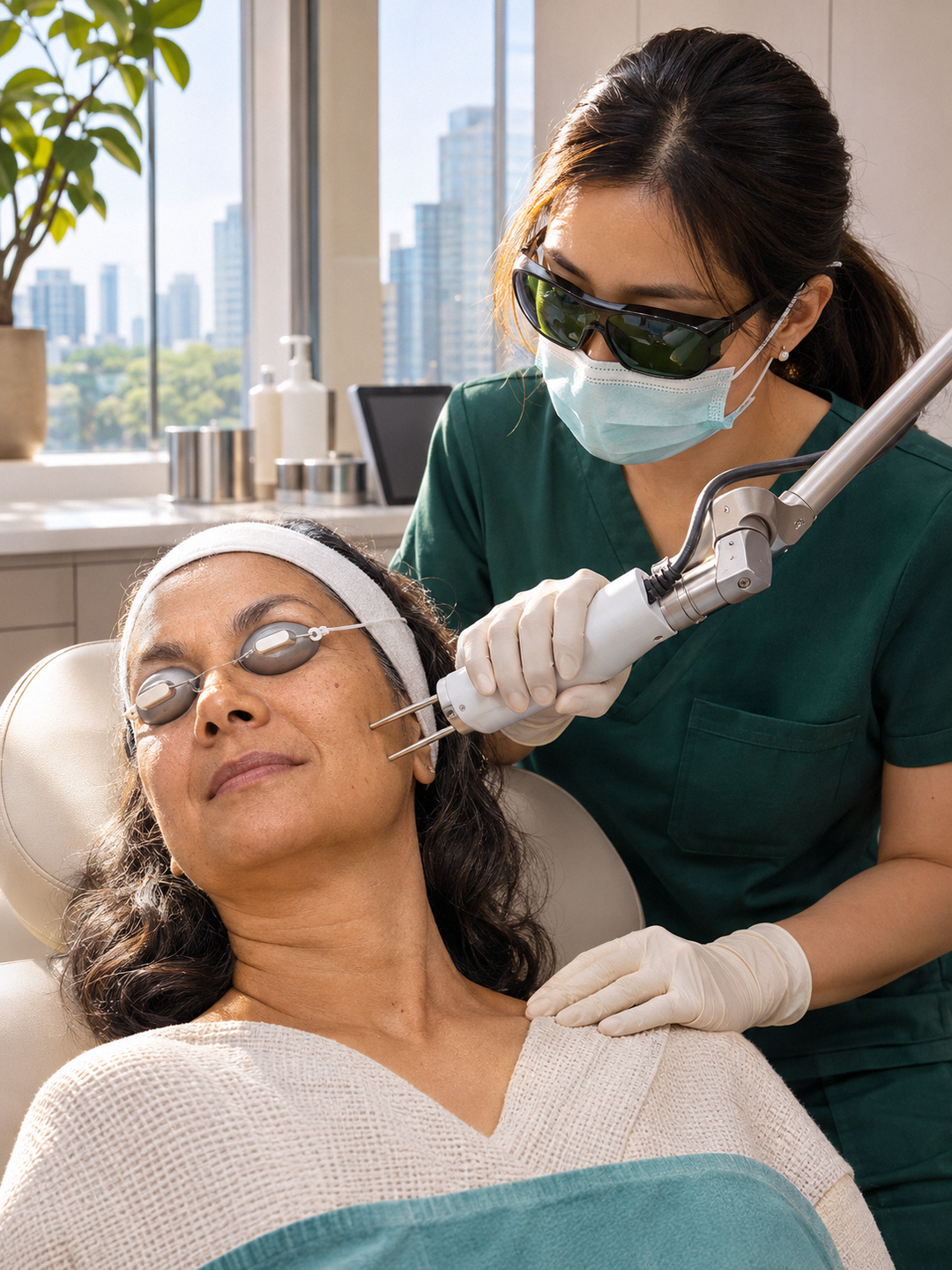
A chemical peel is a clinician-supervised procedure in which a selected chemical solution produces controlled exfoliation or injury to the skin. Different ingredients, strengths, application techniques and contact times influence how deeply the peel acts. Superficial peels differ substantially from medium-depth or deep peels, including in recovery and risk.
A peel is not simply a stronger version of everyday face washing. It is a procedure with a defined treatment goal and a need for appropriate assessment, particularly for patients with sensitive skin, a history of pigmentation changes or recent use of strong topical actives.
How Can a Peel Affect Texture and Tone?
For some people, superficial peels can help reduce roughness, improve the appearance of dullness and form part of management for selected acne-related concerns. The result is influenced by the acid used and the underlying diagnosis. Different pigmentation conditions do not respond equally; for example, melasma can worsen with irritation and may require a cautious, long-term management plan.
Rexults' Medical Grade Peel service page describes a cleansing, application and neutralisation process and discusses post-treatment precautions such as sun protection and avoiding irritating exfoliants.
Does Peeling Mean Treatment Is Working?
Visible flaking is not a universal measure of benefit. Some superficial peels cause little obvious peeling; excessive pain, severe redness or prolonged irritation may instead indicate a problem. Patients should not try to accelerate shedding by scrubbing or picking at the skin.
What Is Illuminate LED Therapy?
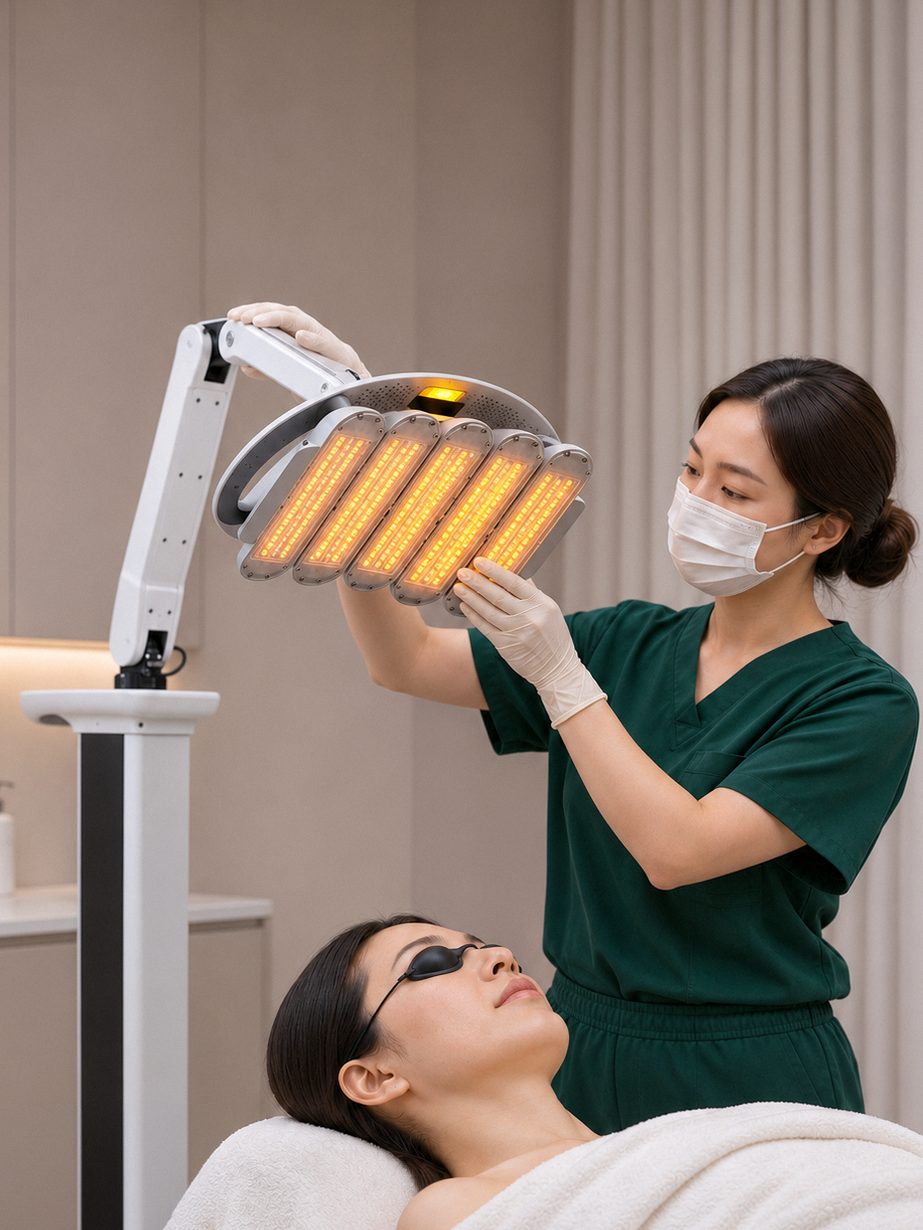
Illuminate LED Therapy is the light-based treatment listed by Rexults Clinic. LED stands for light-emitting diode. Unlike a fractional resurfacing laser, an LED system generally delivers lower-intensity, non-ablative light without deliberately removing skin layers.
The biological effects of light treatments depend on the wavelength, exposure duration, delivered energy and target condition. Different wavelengths are investigated for different indications; evidence for acne, for example, should not automatically be applied to wrinkle reduction or hyperpigmentation.
What Can LED Therapy Reasonably Be Expected to Do?
Research into photobiomodulation suggests that selected LED protocols may offer modest benefits for certain skin conditions. However, treatment outcomes vary across devices and clinical studies, and the evidence is not equally strong for every advertised result.
LED treatment should not be presented as a universal solution for melasma, deep acne scars or substantial skin laxity. It also does not replace indicated medication for inflammatory acne or medical evaluation of persistent skin disease.
Rexults' Illuminate LED Therapy page identifies the clinic's light-based treatment. The exact wavelength and protocol should be checked with the clinical team when making more specific claims.
What Does Research Actually Support?
Chemical peels have an established role in selected superficial textural and pigmentary conditions, but evidence and expected outcomes vary by peeling agent, concentration and depth. Results from a mild superficial peel should not be generalised to a medium-depth procedure.
Photobiomodulation and other LED-based approaches have been investigated for acne and certain other dermatological indications. Research is promising in some settings, but the wavelength, dose, number of sessions and type of device influence the findings. Evidence from home-use blue or red LED devices does not automatically establish the effect of Rexults' specific Illuminate protocol.
For a meaningful comparison, patients should ask what diagnosis each treatment addresses, how improvement will be measured and what evidence supports the exact procedure. An expected change in visible redness is not necessarily equivalent to improvement in acne scars or permanent pigment correction.
Medical Grade Peel vs LED Therapy: Main Differences
The key comparison is controlled exfoliation versus light-based treatment. Both can appear in a skin programme, but their targets, aftercare requirements and evidence differ.
Can Chemical Peels and LED Therapy Help Acne-Prone Skin?
Acne involves a mixture of factors, including sebum production, follicular blockage, inflammation and microbial activity. Depending on the clinical situation, a superficial chemical peel may be considered as an adjunct to help with particular acne-related problems. It does not replace an appropriate acne treatment plan when inflammatory disease is persistent or severe.
Light-based therapies are also studied as adjuncts for acne. Some wavelengths have better evidence for selected acne outcomes than others. However, the fact that a device emits coloured light does not mean it treats every form of acne, and LED therapy is not a treatment for deep, tethered acne scars.
A patient whose main concern is active acne rather than dullness should focus first on controlling breakouts and preventing scarring.
What About Pigmentation and Uneven Skin Tone?
Post-inflammatory hyperpigmentation, freckles, solar lentigines and melasma can all produce brown areas, but they are not biologically identical. A peel may be appropriate in some treatment plans while being inappropriate or overly irritating in others. LED should not be promoted as a substitute for diagnosis and evidence-based management of pigment disorders.
In Singapore, UV exposure remains relevant throughout the year. Consistent photoprotection helps reduce the risk of new sun-induced pigmentation and may be particularly important after a peel.
The decision to use a chemical peel or light-based therapy should therefore follow an assessment of the type of pigmentation, recent sun exposure, current skincare products and history of post-inflammatory darkening.
Chemical Peel Depth Changes Recovery and Risk
The description medical grade peel alone does not specify how deeply a product acts. Superficial peels can cause mild redness, tightness and short-lived shedding; medium and deep peels have different recovery requirements and a greater potential for complications. The intended depth depends on the chemical formulation, application technique and clinical goal.
Chemical peels may produce post-inflammatory hyperpigmentation or, less commonly, lighter patches, infection or scarring. Patients with a history of pigment change or who take strong exfoliating medications should discuss these factors during assessment. A procedure promoted as quick or convenient should not be assumed to carry no downtime.
People managing acne may also need to treat active inflammation first rather than rely on a peel or LED session alone. Likewise, patients with pigmentation benefit from identifying the subtype before selecting exfoliation.
Safety and Downtime: Which Is Gentler?
A superficial peel may produce tingling, redness, dryness and short-lived flaking. Stronger peels carry greater risk of prolonged redness, pigment change, burns, infection or scarring. People with deeper skin tones can receive selected peels, but product choice and clinician experience matter because unwanted hyperpigmentation may be more likely after irritation.
LED sessions are often better tolerated, but “non-invasive” is not a guarantee that the treatment is suitable for everyone. Eye protection and consideration of photosensitising medicines or relevant conditions may be necessary. Patients should follow the specific device protocol rather than assuming all light-based treatments are interchangeable.
Before and After a Peel
Doctors may advise pausing selected retinoids, exfoliating acids or other irritating products around treatment. Aftercare may include gentle cleansing, moisturising, avoiding picking and consistent sun protection. The precise plan depends on peel depth and patient response; a universal seven-day rule would be too rigid for every formulation.
After LED Treatment
Post-care requirements are typically less involved than after skin-resurfacing procedures, but patients should ask about their individual plan and whether other treatments were performed during the same visit.
Can They Be Used in the Same Programme?
Rexults describes combinations involving Illuminate Therapy in some of its published programmes. That supports discussing the two as potentially complementary modalities, not promising that the combination accelerates healing or produces superior results for every patient.
Clinical suitability depends on the peel selected, current skin condition, LED device and the sequence of care. If the skin is unusually irritated after a peel, introducing additional procedures without reassessment may be inappropriate.
Can the Treatments Be Complementary Without Being Performed Together?
Yes. Two treatments can serve distinct purposes within an overall care plan without needing to be administered during the same visit. A medical peel may be discussed for a particular superficial skin concern, while LED therapy may be considered separately for an indication supported by the chosen device and protocol.
The choice of sequence should consider skin tolerance and the purpose of each procedure. Recently peeled, irritated or inflamed skin may need time to recover before further interventions. More intensive treatment does not always mean faster or safer progress.
A broader Healthy Skin Programme can provide a context for discussing ongoing skincare, risk reduction and treatment selection rather than treating one session as the entirety of skin health.
Choosing an Approach for Healthy Skin Maintenance
Healthy skin care does not require regular clinical procedures. For many people, a consistent routine involving a gentle cleanser, moisturiser and broad-spectrum sunscreen provides the most important foundation. Where acne, pigmentation or textural problems persist, a clinician can consider whether a peel, LED treatment or another medical intervention has a reasonable role.
Patients should ask what specific result is expected and how it will be assessed. “Brighter skin” can mean less surface roughness, reduced inflammation or altered pigmentation; identifying the desired change makes treatment selection more precise.
Want to understand whether peels or LED treatment fit your skin needs? Contact Rexults Clinic for an individual skin assessment and discuss the available options, risks and expected recovery.
Where Do Medical Grade Peels and LED Fit Into Skin Longevity?
Skin longevity is best understood as maintaining function, comfort and health over time rather than pursuing constant exfoliation. The outer skin barrier is protective; irritating it repeatedly is not automatically beneficial. Similarly, LED therapy can be a useful adjunct in selected circumstances without being a substitute for fundamental skin care.
For patients comparing chemical peels and LED light therapy in Singapore, the answer lies in the diagnosis, not a general ranking. A peel changes how superficial layers are shed or remodelled. LED uses light to influence selected biological processes. Both require appropriate indications, realistic expectations and proper follow-up.
To discuss personalised skin care, arrange a consultation with Rexults Clinic.
Frequently Asked Questions About Medical Peels and LED Therapy