The phrase skin rejuvenation can refer to several very different treatments. Some use energy to initiate a controlled healing response. Others use needles or specialised devices to place selected ingredients within the skin. Both may be discussed for texture and early signs of ageing, but they do not work in the same way.
At Rexults Clinic in Singapore, two relevant approaches are ReviFrax® fractional laser treatment and Precision Regenerative Micro-Infusion. ReviFrax uses laser energy delivered in a fractional pattern to influence tissue at different depths. Precision Regenerative Micro-Infusion is described by the clinic as a device-assisted delivery approach involving selected skin-quality ingredients.
The short answer: ReviFrax is primarily an energy-based skin-remodelling procedure; Precision Regenerative Micro-Infusion focuses on controlled delivery of selected ingredients with a device-assisted technique. Which is more suitable for acne scars, enlarged-looking pores or uneven texture depends on the problem being treated, skin tone, device settings, product selection and clinical assessment.
Why Skin Renewal Requires More Than Surface Exfoliation
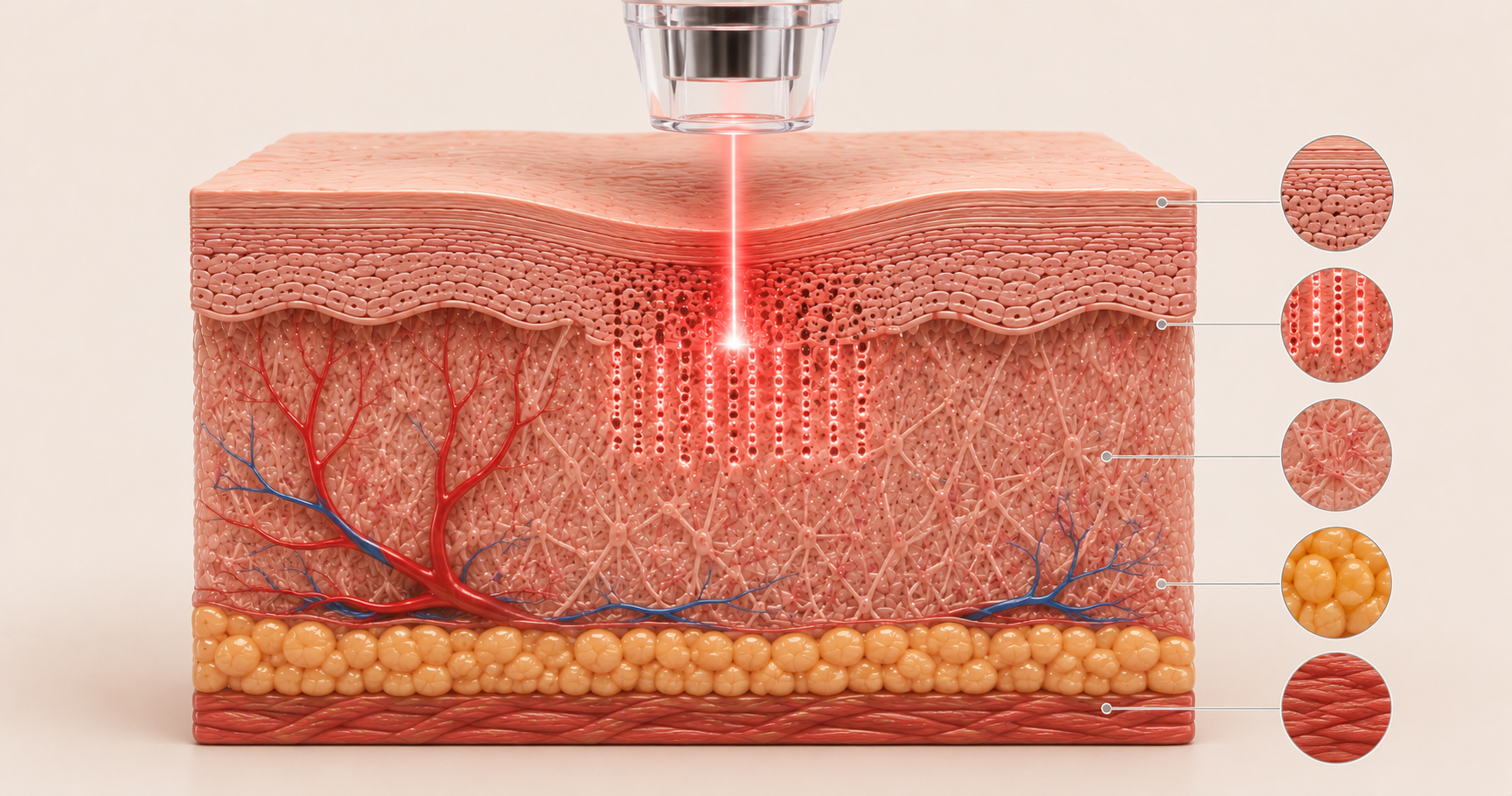
Skin texture is shaped by the epidermis and the deeper dermis. The epidermis continually renews itself, while collagen fibres, elastin and surrounding structures in the dermis help determine firmness and contour. Acne inflammation can damage these supporting structures, leading to depressions or irregularity even after the original breakout has settled.
A skincare product may soften dry or rough surface skin, but it cannot be assumed to lift a deep scar. Similarly, a procedure that supports collagen remodelling may not correct pigmentation unrelated to texture. The practical challenge is to identify whether the visible concern comes from surface roughness, atrophic scars, enlarged-appearing pores, inflammation or a combination of these factors.
Rexults has a condition page explaining common scar types and the importance of assessment before choosing acne scar treatment in Singapore.
The Difference Between Acne Scars, Pigment Marks and Rough Texture
A person may describe every mark left after acne as a scar. Clinically, however, an atrophic acne scar is a structural depression; post-inflammatory hyperpigmentation is a change in colour, and post-inflammatory erythema is persistent redness. These conditions may coexist, and an individual may also have active acne and enlarged-looking pores.
This distinction is central to selecting an appropriate skin treatment. Someone with a brown post-acne mark may benefit from a different management strategy from someone with a deep tethered rolling scar. A fractional laser should not be presented as universally appropriate for all pigmentation problems, and micro-infusion should not be assumed to correct deep depressions.
Rexults has separate pages covering uneven skin tone and texture and pigmentation, reflecting why a diagnosis matters before choosing a technology.
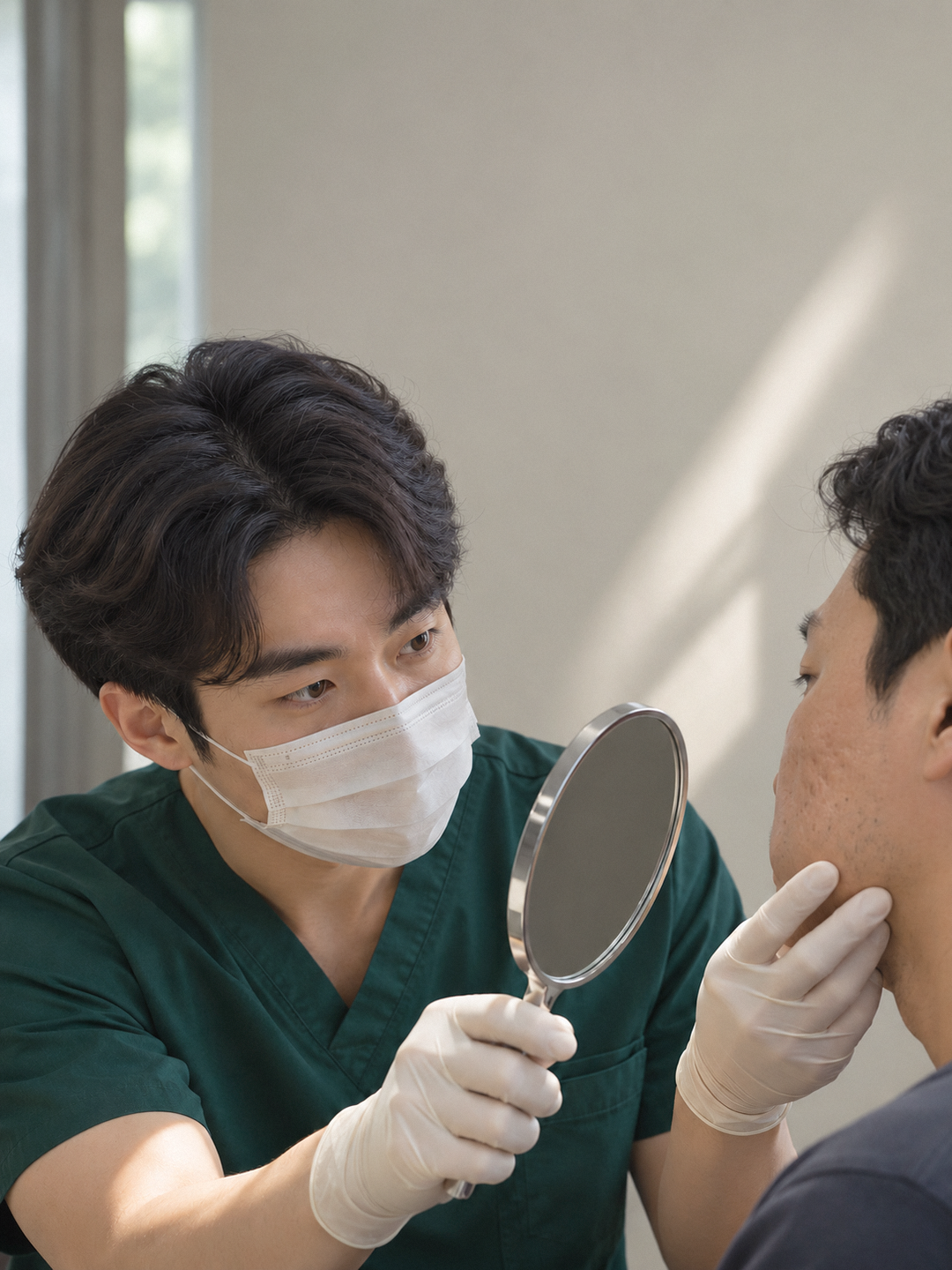
What Is ReviFrax®?
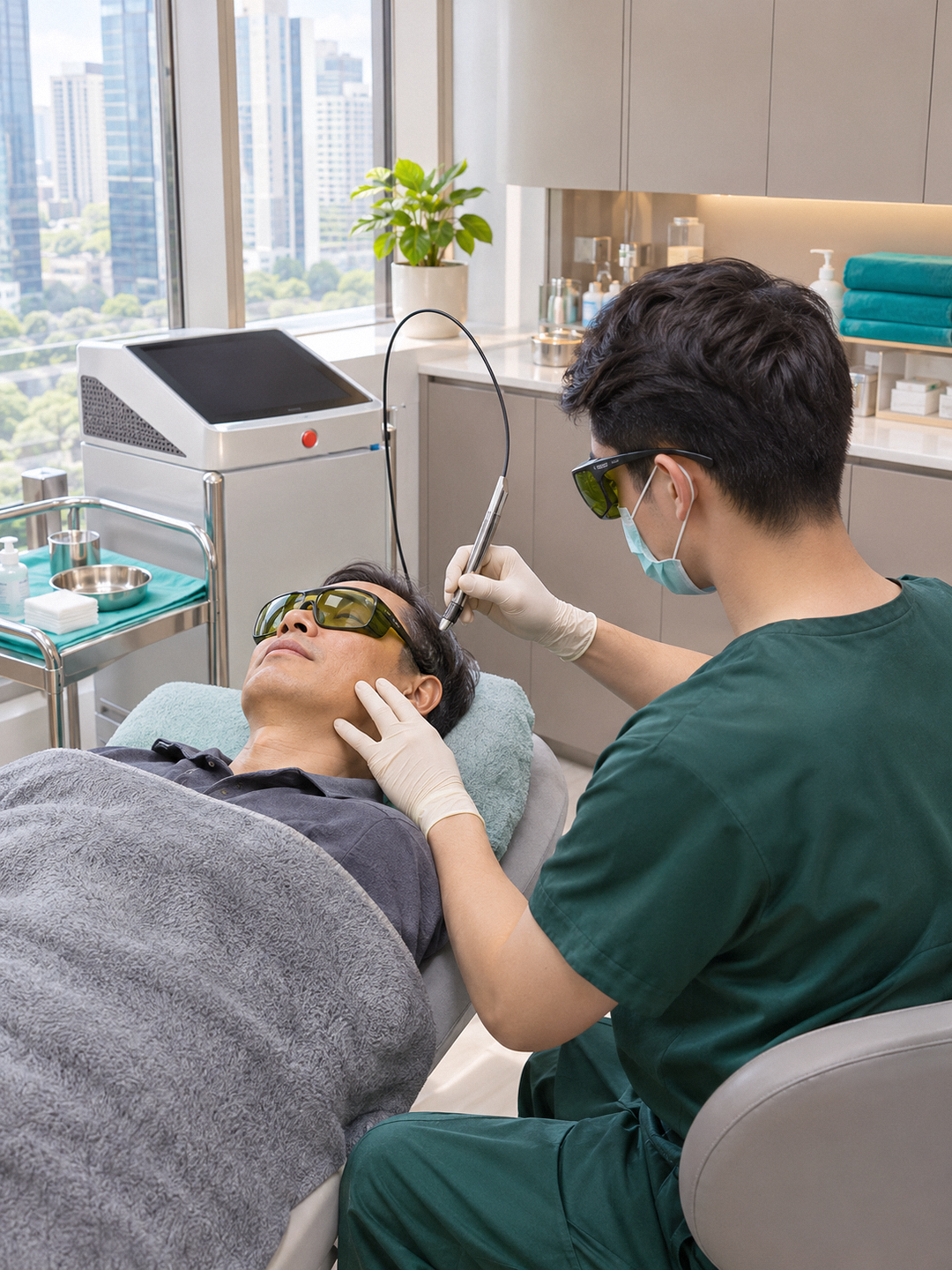
ReviFrax® is described by Rexults as a dual-wavelength fractional laser intended for selected concerns involving skin texture and regenerative skin renewal. Fractional treatment delivers energy to a pattern of small treatment zones rather than exposing the entire skin surface uniformly.
The intent is to create controlled tissue effects while leaving intervening areas untreated. Subsequent healing may influence collagen structure and the appearance of irregular texture. Response depends on the wavelengths, energy settings, tissue depth and individual healing characteristics.
How Fractional Laser Remodelling Works
With fractional laser resurfacing, small zones of thermal or other laser-induced tissue effect stimulate a repair process. Over time, the appearance of selected scars or texture changes may improve. That does not mean the process is instant or that every scar responds equally.
ReviFrax is also described as creating microchannels that may affect how topical ingredients are delivered after treatment. Whether a particular topical combination has meaningful evidence should be assessed separately; a microchannel does not automatically make an ingredient safe, appropriate or more effective for every patient.
Rexults explains the intended applications of ReviFrax fractional laser, including acne scarring, enlarged-looking pores and uneven skin texture.
What Does ReviFrax Not Necessarily Do?
Laser treatment cannot be presumed to flatten every deep acne scar in a single session. Narrow ice-pick scars and tethered rolling scars may need very different approaches. Neither should treatment be expected to permanently eliminate pores; pores are normal skin structures whose apparent size varies with oil production, genetics and skin condition.
What Is Precision Regenerative Micro-Infusion?
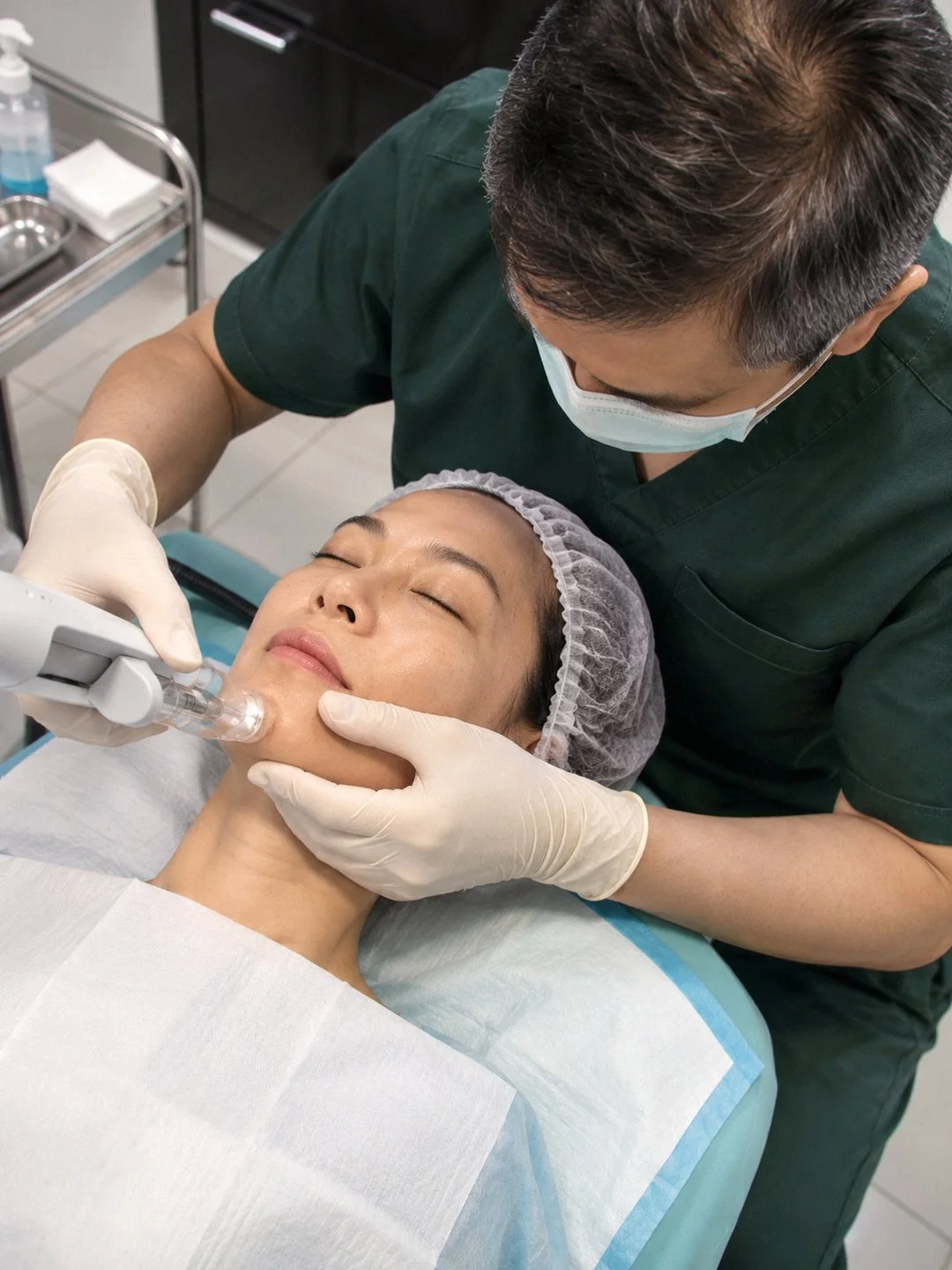
Precision Regenerative Micro-Infusion is presented by Rexults as an approach that uses a specialised delivery device to place selected ingredients, including hyaluronic acid and amino acids, into the skin. The clinic describes potential applications in acne-related textural concerns and skin-quality support.
The important qualification is that this is the clinic's published treatment description, not confirmation that a particular device-and-ingredient combination has been clinically established for all acne scars or all skin types. The product's identity, treatment depth, evidence and safety precautions need to be confirmed with the doctor before publication of narrower efficacy claims.
Where Does Micro-Infusion Fit in a Skin-Texture Plan?
This approach may be discussed when a clinician is exploring skin quality, surface irregularity or a supportive treatment strategy. The procedure is different from fractional laser in the energy or mechanism used: its defining feature is a delivery method rather than laser irradiation.
Because “micro-infusion” can be used broadly across the aesthetic market, two clinics may use that phrase for different equipment and ingredients. Patients should ask exactly what Rexults plans to use rather than assume it is equivalent to a familiar microneedling treatment elsewhere.
Why Fractional Laser Settings Matter
The clinical effects of fractional lasers depend on the type of laser, wavelength, energy delivered, coverage density and depth. Fractional does not mean identical risk or recovery across every device. Different systems can create different patterns of injury, and a treatment programme must account for skin characteristics and the condition being treated.
ReviFrax is described by Rexults as using two wavelengths and forming microscopic channels while supporting selected skin-renewal objectives. The precise settings and the way post-treatment ingredients are selected should be discussed with the treating clinician. This is especially relevant for patients who have previously developed dark marks following inflammation or procedures.
The fact that a procedure opens channels does not alone prove that any topical product placed afterward has been tested for the same route of exposure. Ingredient suitability should be considered separately from the effects of the laser itself.
ReviFrax vs Micro-Infusion: Which Does What?
Both may appear in conversations about collagen support and skin renewal, but the primary clinical question is whether a controlled fractional energy treatment or a device-assisted ingredient delivery strategy is appropriate for the specific concern.
Which Approach Is More Relevant to Acne Scars?
Atrophic Acne Scars
Depressed acne scars involve changes in collagen and dermal support. Their shape matters. Rolling scars may be tethered by fibrous attachments, boxcar scars can have sharply defined edges, and ice-pick scars extend narrowly into the skin. The response to any rejuvenation treatment will depend on scar morphology and severity.
A clinician might discuss fractional laser treatment when skin resurfacing or remodelling is appropriate. Device-assisted infusion may be discussed for selected superficial or supportive goals. Neither should be portrayed as universally superior for all scar types, and complex scarring may require different or staged interventions.
Post-Acne Marks Are Different
Redness and brown marks remaining after acne are not the same as true depressed scars. Pigmentation can be affected by sun exposure and inflammation. Selecting the wrong intervention—or performing an unnecessarily aggressive procedure—could worsen discolouration in susceptible patients.
Enlarged-Looking Pores and Uneven Texture
Enlarged-looking pores may relate to genetics, sebum production, follicular structure or changes in surrounding dermal support. Treatment can sometimes refine the appearance of pores but cannot remove them. Assessing active acne and oil production can be just as important as considering resurfacing.
People researching this concern can read Rexults' overview of enlarged pores before deciding which questions to raise at consultation.
Can Either Treatment Permanently Remove Pores?
No treatment permanently removes normal pores, which are openings associated with hair follicles and sebaceous glands. The appearance of pores can change with oil production, skin elasticity, lighting and surrounding texture. Some procedures may reduce their visibility for a period, but that is not the same as eliminating the underlying structure.
This matters because photo-damaged skin, old acne scars and prominent pores may all contribute to uneven-looking texture while requiring different management. When comparing treatments, patients should establish what will be measured: the appearance of a scar, a change in roughness or a reduction in the visibility of pores.
What Are the Risks and Downtime?
Fractional laser procedures can cause redness, swelling, a rough or sandpapery sensation and transient pigment changes during healing. The intensity depends on the laser mode and settings. Potential complications include post-inflammatory hyperpigmentation, prolonged erythema, infection, burns or scarring. Patients prone to pigmentation changes require especially careful selection and aftercare.
A device-assisted infusion procedure may involve multiple small skin punctures and related risks such as temporary redness, bruising, swelling or irritation. Infection and pigment changes are possible when the skin barrier is disrupted. If substances are introduced through microchannels, their identity and suitability for that use are essential safety questions.
Neither treatment should be labelled “zero downtime” without reference to a specific protocol. In a tropical, high-UV setting such as Singapore, sun avoidance and diligent photoprotection after treatment may be especially important.
Could ReviFrax and Micro-Infusion Be Combined?
A doctor might consider staged complementary approaches in selected cases, but combining procedures does not inherently improve the result. There are also reasons to avoid or delay a combination: recently irritated skin, active infection, high risk of pigment change, the need to assess response to the first treatment or uncertainty about a product's suitability for recently treated skin.
If fractional laser has already created microchannels, any application of an additional substance requires a clear medical rationale and appropriate product selection. “Better absorption” alone is not evidence of improved efficacy or safety.
Planning Treatment for Skin Prone to Post-Inflammatory Pigmentation
Many patients in Singapore have skin that can develop lasting brown marks after inflammation. Any procedure that deliberately creates controlled injury may carry some risk of post-inflammatory hyperpigmentation, even when the expected result is improvement in texture. A history of melasma, recent sun exposure, active irritation or an earlier reaction to a procedure may affect the treatment decision.
The clinician should explain the proposed aftercare, including cleansing, moisturisation, photoprotection and the timing for restarting active skincare products. Patients should not pick at scabs or attempt home resurfacing while the skin is healing. If redness, pain, swelling or colour change is worsening rather than settling, prompt review is appropriate.
What Should Patients Ask Before Treatment?
For ReviFrax, ask which laser mode is proposed, what concern it targets, what recovery is typical and how the clinician intends to reduce pigmentation risk. For micro-infusion, ask about the device, ingredient list, route of administration, sterility, clinical evidence and expected response. For either, discuss previous scars, cold sores, pigmentation reactions, medicines and recent procedures.
Also ask how progress will be assessed. Consistent photos and an agreed treatment goal—such as the appearance of specific texture changes—are more meaningful than a vague promise of “regeneration”.
Considering treatment for uneven texture or acne scars? Arrange a consultation at Rexults Clinic to discuss whether fractional laser, micro-infusion or another approach fits your skin condition and treatment goals.
Skin Renewal Is a Process, Not a Single Session
The skin's response to a procedure changes over time. Redness may settle before the final textural result becomes apparent; collagen remodelling, when it occurs, is not immediate. Additional sessions may or may not be appropriate depending on response and tolerance.
For someone comparing ReviFrax and Precision Regenerative Micro-Infusion in Singapore, the most helpful approach is to identify the anatomical cause of the concern and weigh the expected benefit against downtime, cost and risk. A measured plan often serves skin health better than pursuing several treatments at once.
To explore treatment options with a medical professional, contact Rexults Clinic about an appointment.
Frequently Asked Questions About ReviFrax and Micro-Infusion