A mark left after acne can be a flat brown patch, a red area, a small depression or a deeper indentation. These changes may all be called 'acne scars' in everyday conversation, but medically they are not the same. That distinction is central when comparing ReviFrax and Pico Laser for acne scars in Singapore.
The short answer: ReviFrax is presented by Rexults as a fractional laser approach used for skin texture and collagen remodelling. Pico Laser refers to a family of short-pulse technologies often used for selected pigmentation targets; certain picosecond platforms also have fractional modes studied for acne-scar texture. Which is appropriate depends on whether the concern is mainly colour, surface texture or deeper scar structure—and on the exact device settings available.
Treating a red or brown post-acne mark as though it were a depressed scar can lead to unnecessary resurfacing. Conversely, treating a tethered rolling scar only as a pigment problem may leave the underlying indentation largely unchanged. The goal is to identify the problem before selecting a procedure.
Acne Scars vs Post-Acne Marks: Why the Difference Matters
Inflammatory acne can leave changes in the skin after a breakout settles. Some are pigmentary and others involve damage to dermal collagen or the supporting architecture. A patient may have both kinds at once.
Post-Inflammatory Hyperpigmentation (PIH)
PIH describes flat brown or grey-brown marks remaining after inflammation. The surface may still feel smooth even though colour is altered. These marks can fade gradually but may persist, particularly when acne continues or the skin is repeatedly irritated. Sun exposure and further inflammation can make them more noticeable.
Post-Inflammatory Erythema (PIE)
PIE refers to residual redness associated with vascular or inflammatory changes. It can be mistaken for pigmentation or structural scarring, but a pigment-targeting laser is not necessarily the appropriate intervention for a red mark. Redness needs its own assessment.
Atrophic Acne Scars
Depressed scars occur when inflammation damages dermal support and healing leaves an indentation. The main forms include ice-pick, boxcar and rolling scars. Scar types differ in width, depth, edge shape and whether fibrous bands pull the skin down. A person often has mixed scars.
Rexults' overview of acne scars explains the main patterns and why assessing scar structure matters. This article focuses on how laser technologies may fit into that assessment—not on promising complete removal.
Why Active Acne Should Be Addressed Before Scar Treatments
New breakouts can produce new marks or scars even while older ones are being treated. For this reason, a sensible plan often includes controlling active inflammation and discouraging picking or squeezing. An active acne problem may require medical management, not a resurfacing session.
Rexults provides separate information about acne, which helps distinguish prevention and management of new lesions from treatment of existing scars. The two priorities are related but not interchangeable.
Skin barrier condition also matters. Aggressive exfoliation or inappropriate procedures on inflamed skin may increase irritation and the risk of darkening after treatment. A clinician should review current skincare, prescription medication, past procedures and any pattern of post-inflammatory pigmentation.
What Is ReviFrax®?
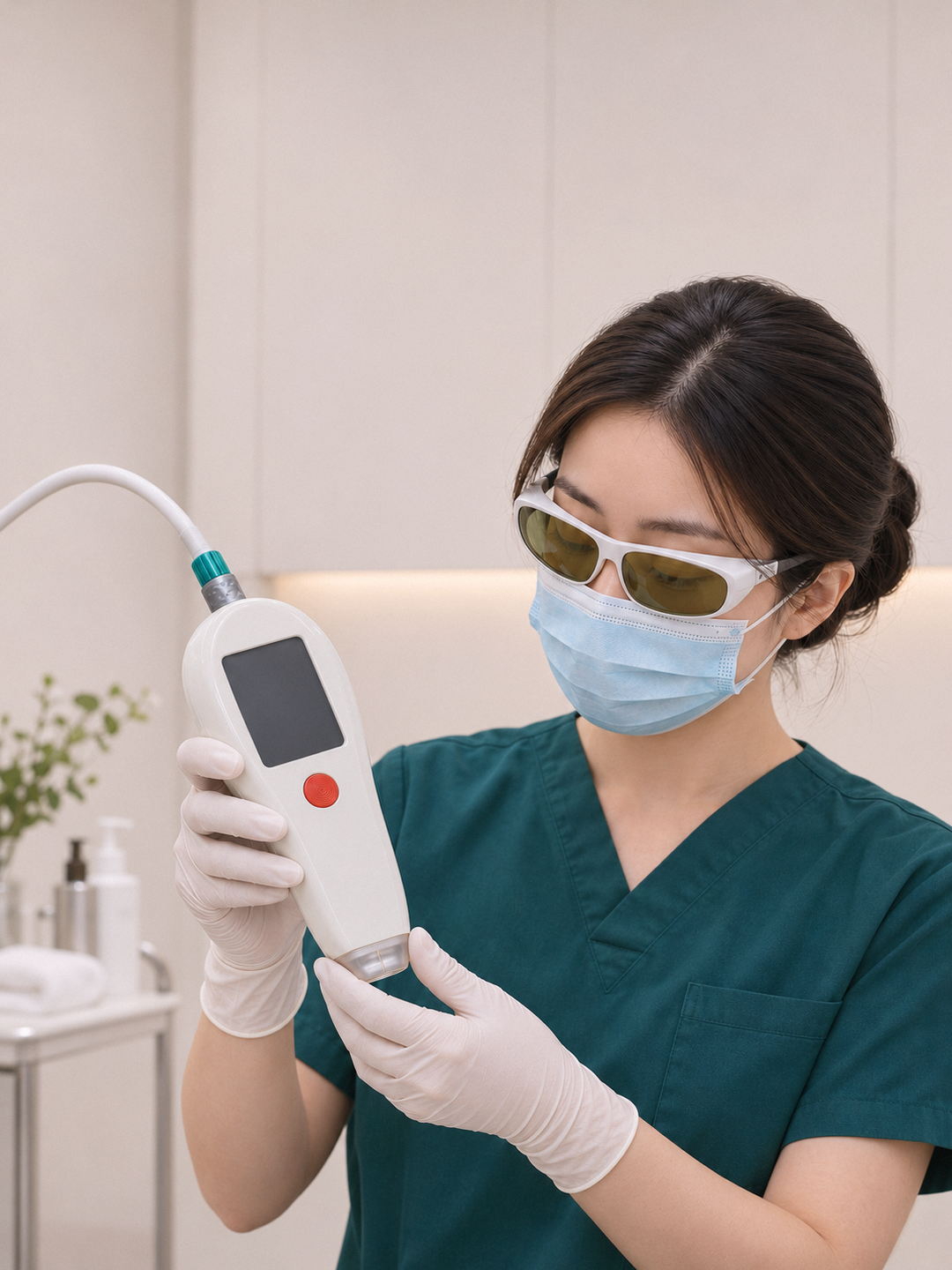
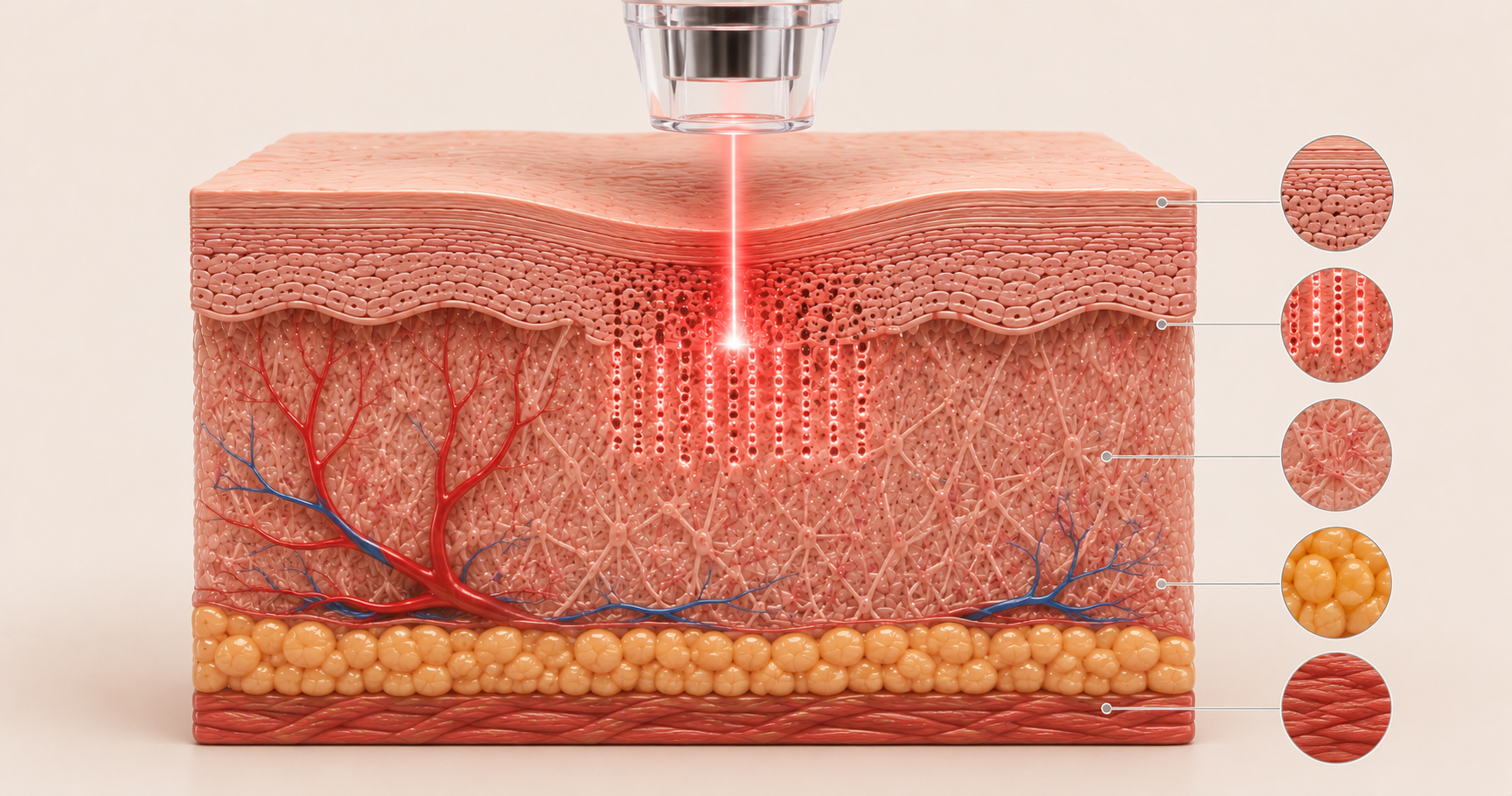
ReviFrax® is described by Rexults Clinic as a precision fractional laser treatment for skin renewal, texture improvement and collagen remodelling. The clinic's published description refers to dual-wavelength delivery and controlled microscopic treatment zones or microchannels while leaving surrounding areas comparatively less affected.
The principle of fractional treatment is to deliver energy to portions of the skin rather than uniformly treating the whole surface. The subsequent healing response can alter the appearance of selected textural irregularities over time. The details of tissue interaction, depth and downtime depend on the equipment and settings.
Learn about the clinic's ReviFrax® treatment and discuss the actual technology and treatment protocol with a doctor before making assumptions based on generic fractional-laser information.
How Might Fractional Laser Treatment Affect Acne Scar Texture?
Selected fractional lasers can create controlled tissue effects that stimulate remodelling of collagen as the skin heals. For suitable acne scars, this may lead to gradual changes in surface irregularity and texture. The results depend on scar type, depth, skin tone, settings and the number of sessions. Deep ice-pick scars or strongly tethered rolling scars may not respond adequately to fractional resurfacing alone.
It is important not to promise complete scar removal. Even meaningful improvement may leave visible irregularities. Patients should discuss the likely range of outcomes for their particular scar pattern.
What Is Pico Laser?
A picosecond laser produces pulses measured in trillionths of a second. Many systems are used to target selected pigmentation or ink through predominantly photoacoustic effects. Some platforms also have fractional or diffractive attachments that create distributed tissue effects and have been studied for scar texture, photoageing and fine lines.
This distinction is essential: not every Pico Laser treatment is a scar-resurfacing treatment, and not every picosecond platform has the same fractional mode. Before comparing it with ReviFrax, the clinician must explain which Pico device and mode are available.
Rexults' current service destination is Pico Laser. The precise treatment objectives need to be established during assessment rather than inferred from the product category.
Can Pico Laser Help Post-Acne Dark Marks?
Certain pigment-targeting picosecond settings may be considered for selected pigmentation concerns, but PIH often benefits from controlling the underlying inflammation, gentle skincare and consistent sun protection first. A procedure that causes new inflammation may worsen dark marks. A patient with brown patches needs a diagnosis to determine whether these are indeed PIH or another pigmentation disorder.
For broader context, Rexults describes pigmentation concerns and why changes in colour can have different causes. Pigmentation after acne should not be treated as a synonym for scarring.
ReviFrax vs Pico Laser: The Main Clinical Differences
The clinically useful comparison is fractional texture remodelling versus the specific pigment or fractional mode selected with a Pico platform. The distinction is not absolute: selected Pico systems can also have scar-texture applications. Device configuration and diagnosis determine the comparison.
Which Treatment Is Better for Ice-Pick Scars?
Ice-pick scars are narrow and deep. They can be difficult to improve using surface-directed treatment alone because the defect extends into deeper tissue. Depending on the clinical assessment, a doctor may discuss focal approaches in addition to, or instead of, broader resurfacing.
Neither ReviFrax nor standard pigment-targeting Pico treatment should be presented as a guaranteed solution to deep ice-pick scars. Their role depends on the scar's depth and the particular technology available.
What About Boxcar and Rolling Acne Scars?
Boxcar scars have more defined edges; rolling scars often involve fibrous tethering below the skin. Fractional resurfacing can potentially improve aspects of texture, but tethered rolling scars may require a procedure addressing the fibrous bands, rather than light energy alone.
The clinic should assess whether a scar is shallow, deep, tethered or mixed. A sequence of techniques may be discussed in suitable cases, but this is a medical decision rather than an argument for combining devices in every patient.
Rexults also lists Precision Regenerative Micro-Infusion among its treatments. Its presence on the clinic's service list should not be interpreted as evidence that it replaces fractional laser treatment or solves every scar pattern. Any additional procedure needs its own rationale and evidence.
What if the Main Concern Is Uneven Skin Texture?
Not every rough-looking area is a scar. Enlarged pores, active acne, dehydration or surface irregularity can influence texture. A patient with mild superficial roughness may need a different plan from someone with deep pitted scars. Likewise, a mark that is flat but brown may be a pigment concern rather than a textural one.
Rexults' uneven skin tone and texture page provides useful context for people unsure whether their complaint relates primarily to colour or surface structure.
Why Collagen Remodelling Takes Time
When a treatment relies on tissue healing and collagen remodelling, change may develop gradually rather than immediately after the session. Early redness or temporary swelling can also change how scars appear. Follow-up photographs taken under consistent lighting can help clinicians evaluate genuine improvement over time.
Improvement should not be promised after one treatment or measured solely by how smooth the skin looks immediately after swelling.
What Are the Downtime and Risks?
Laser response depends on wavelength, mode, energy, treatment area and individual skin characteristics. Redness, swelling, tenderness and temporary roughness may occur. More intensive treatments can produce crusting, prolonged redness, pigment changes or infection. Less common complications include scarring.
Post-inflammatory hyperpigmentation is an especially important risk for people prone to darker marks after skin injury. This includes some patients with darker skin tones or histories of PIH. Less visible downtime does not necessarily mean there is no chance of unwanted pigment change.
Protecting treated skin from ultraviolet exposure, following the clinician's advice about skincare products and avoiding picking are important. A personalised aftercare plan is preferable to assuming that every laser procedure requires the same recovery period.
How Many Sessions Are Usually Needed for Acne Scars?
There is no universal session count for 'acne scar removal'. A shallow scar, a deep ice-pick scar and a rolling scar can respond differently. Mixed scar types may require more than one approach, and the number and spacing of visits depend on the procedure and response.
A consultation should distinguish between realistic texture improvement and complete removal. Patients can ask what degree of change is plausible, how progress will be measured and what happens if the first approach has limited effect.
Can ReviFrax and Pico Laser Be Combined?
There may be selected circumstances in which different modalities address different aspects of a patient's concerns, such as pigment and texture. However, receiving both treatments is not a routine requirement. Adding procedures also adds cost, recovery considerations and potential inflammation.
An appropriate plan should explain which problem each treatment addresses and why the expected benefit outweighs risk. If active acne, dermatitis or significant irritation is present, the clinician may instead prioritise stabilising the skin before any resurfacing.
Practical Questions to Ask Before Acne Scar Treatment
Useful questions include: Is this mark pigment, redness or a true depressed scar? What scar types do I have? Which specific Pico mode or ReviFrax settings are proposed? Will the treatment address tethering? What are the PIH risks for my skin type? What improvement is realistic, and how many visits might be needed?
If you are unsure whether you have acne scars or post-acne marks, arrange a skin assessment with Rexults Clinic to discuss your concerns and available options.
Choosing Between ReviFrax and Pico Laser in Singapore
For some patients, the main problem is structural scar texture; for others it is persistent pigmentation or redness. ReviFrax and Pico Laser can have distinct roles, while selected fractional Pico configurations may overlap with resurfacing applications. An accurate examination is more useful than a blanket claim that one is better for all acne scars.
Preventing new acne lesions, protecting skin from sun exposure and allowing enough time for healing remain important even when a procedure is considered. Some scars improve with carefully selected treatment, but outcomes differ and complete removal cannot be guaranteed.
To explore a treatment plan tailored to your acne marks or scarring, contact Rexults Clinic through its official WhatsApp consultation channel.